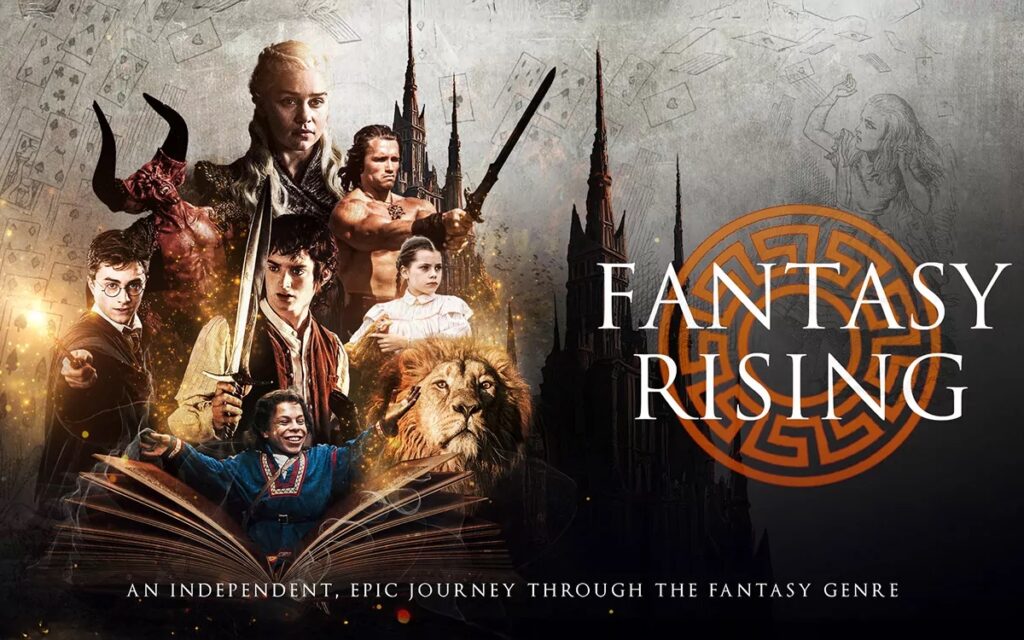
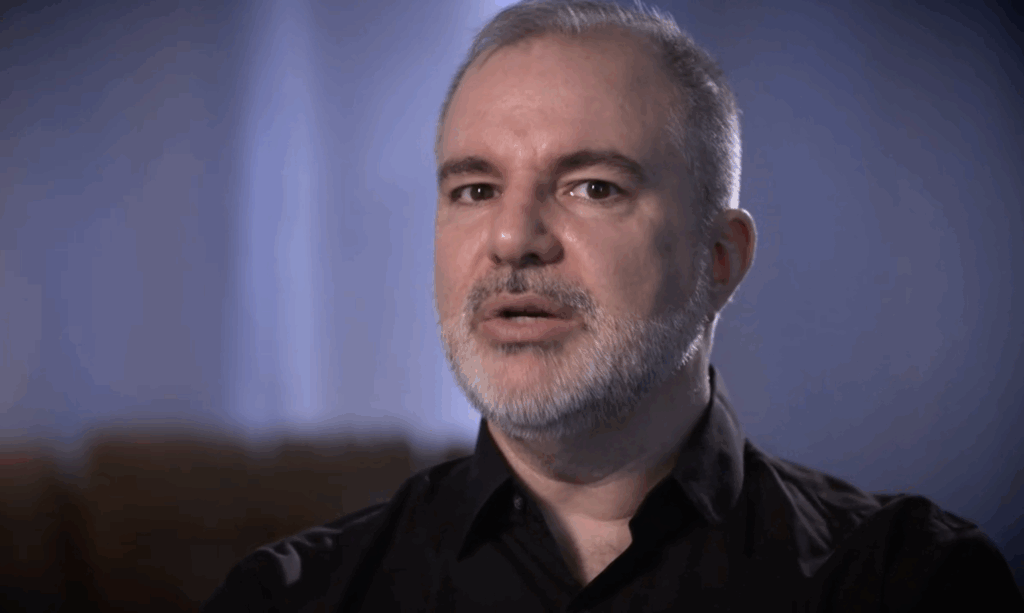
Back in early 2023—two days before my 50th birthday, when I was in a very retrospective headspace—I had the honor and pleasure of sitting for an interview with acclaimed documentarian Tom O’Dell* for Fantasy Rising, his upcoming streaming documentary on the history of the fantasy genre.
We talked for hours, and it felt so natural that I don’t really have much recollection of what I said. I didn’t go in with prepared soundbites I wanted to get on camera, just an open heart and a love of the genre I have been part of as both fan and professional for my entire life.
I’m sure I was brilliant and enthralling as usual, but you don’t need to have faith in me. Tom assembled a cast of interviewees far more clever and experienced than I. Names like Raymond E. Feist, Scott Lynch, Sir Ian Livingstone, Max Gladstone, Ellen Kushner, Elizabeth Bear and Theodora Goss, in addition to a number of journalists and scholars who have studied the fantasy phenomenon for decades.
With a streaming deal in place, Tom is kickstarting funding for completion of the project:
The Kickstarter comes with a bunch of exclusive goodies, and there’s only 17 days left to bid, so click the link, watch the trailer, maybe leave a bid (please and thank you) and if you’re really feeling it, tell me I looked good on the eve of the big five oh.
*Tom O’Dell is the writer, editor, director and producer of over 20 feature docs and co-founder of the independent documentary studio Spiritlevel Cinema. His work focusses on the arts, entertainment and history, previous films include: How The Beatles Changed The World; Manson, Music From An Unsound Mind; Rise Of The Superheroes; Gone With The Wind: The Rise And Fall Of Lynyrd Skynyrd; The Murder Network and Kraftwerk and The Electronic Revolution.
Posted on September 2, 2025 at 2:13 pm by PeatB
Filed under Events, Interviews, Media Comments Off on Fantasy Rising Kickstarter
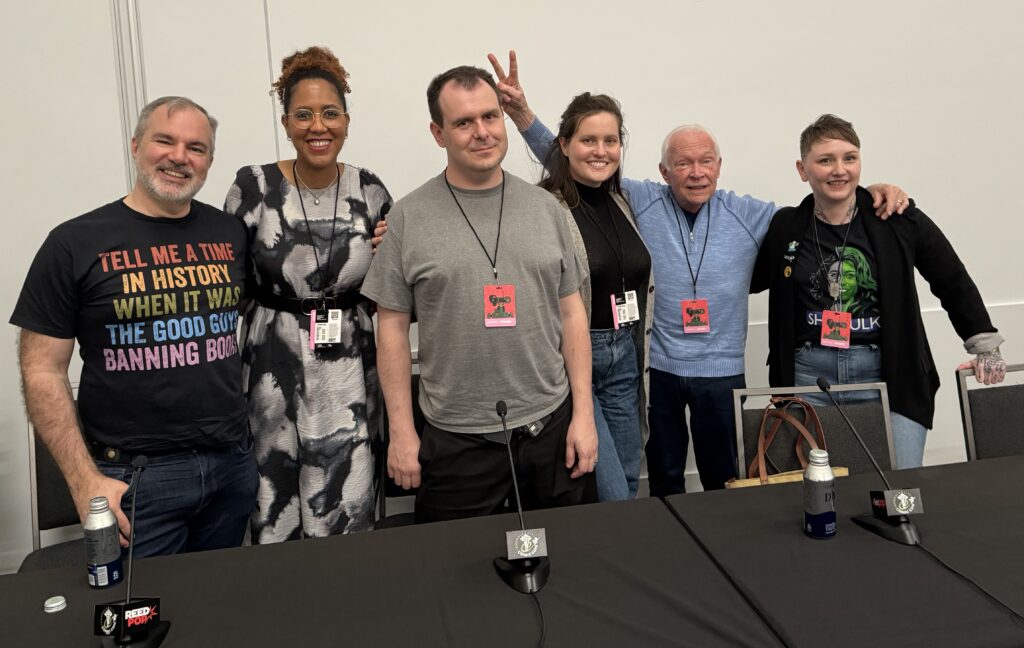
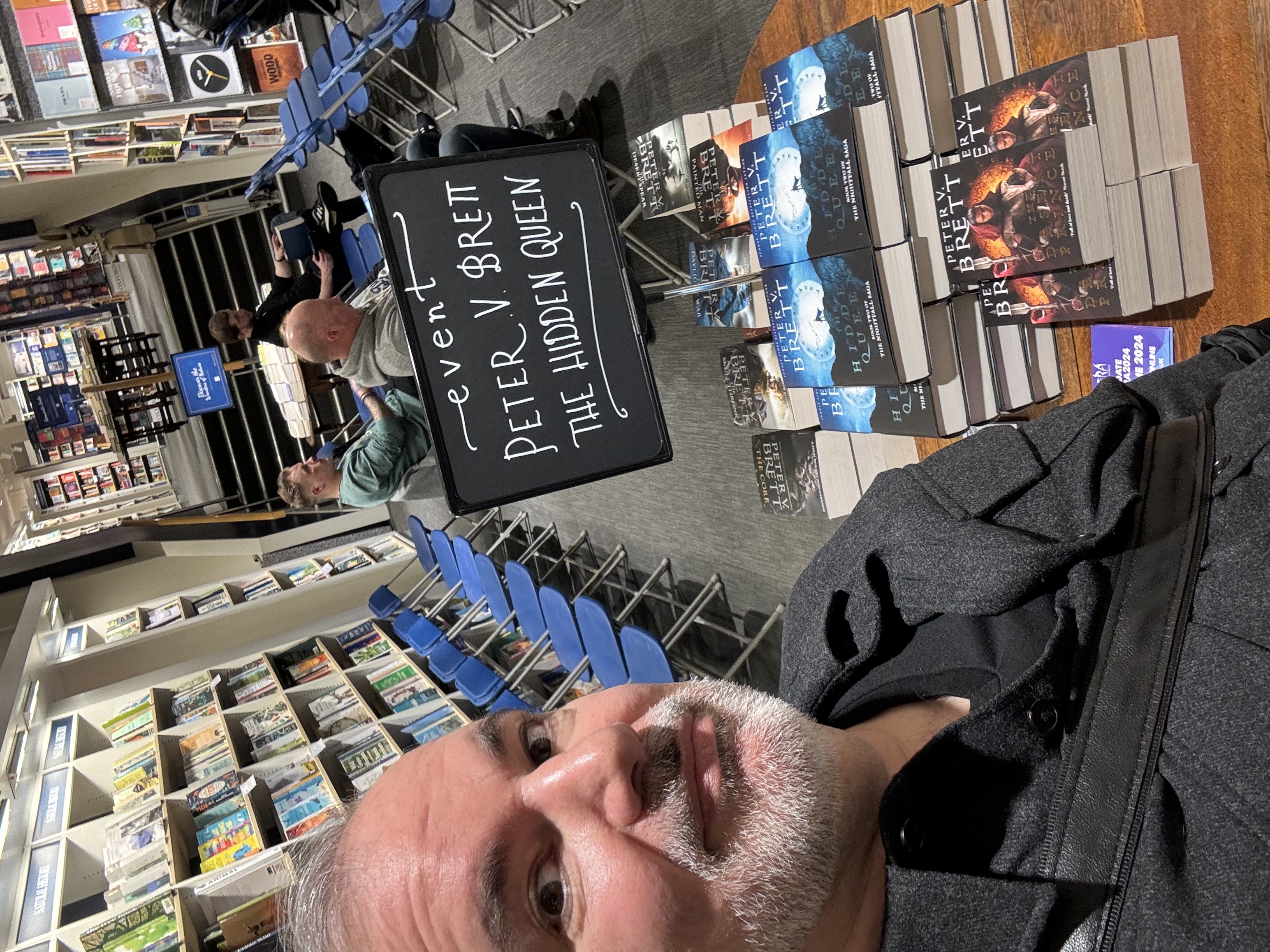
While on book tour for THE HIDDEN QUEEN, I did a panel at Phoenix Fan Fusion with my good friend Sarah Beth Durst, who was touring for her wonderful cozy fantasy novel THE SPELLSHOP.
Sarah’s writing process has always been a mystery of fairies and rainbows to me, but her passion for it is infectious, as well as her argument that we need cozy more than ever in this day and age. I wondered aloud if it was even possible to write a Demon Cycle cozy fantasy. Sarah never missed a beat, telling me and the audience that the whole magic of writing was that anything was possible.
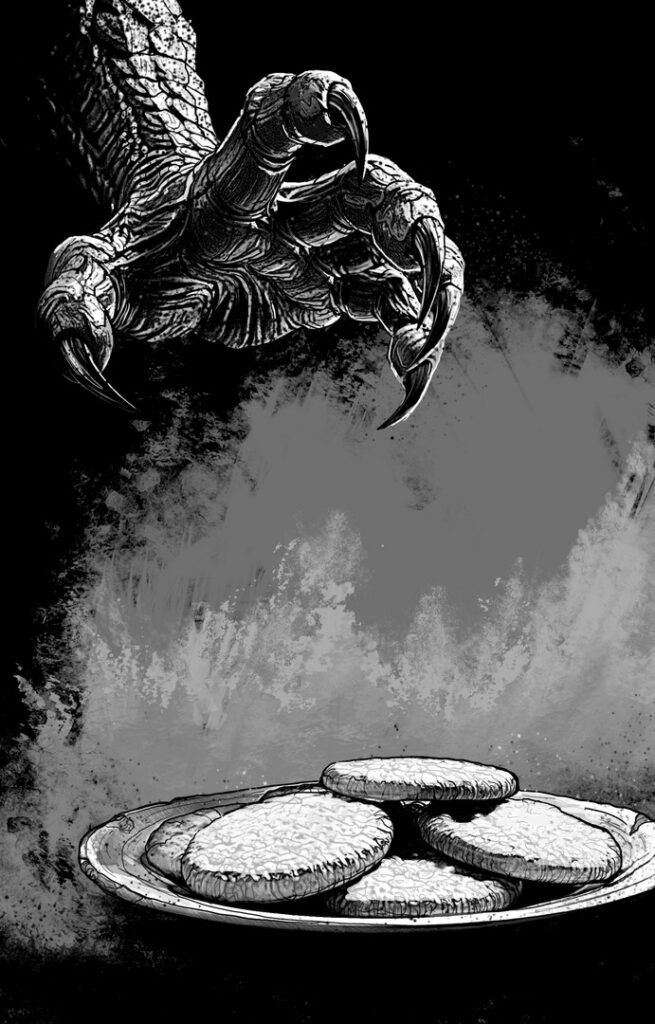
So after the tour but before returning to THE DEMON KING, I took a creative vacation and wrote a quirky little Demon Cycle novella called BUTTER COOKIES AND DEMON CLAWS.
My books have a reputation for horror and heartbreak (sorry not sorry), but in 2025 there’s enough of that IRL. Couldn’t we all use something a little chiller? Lower stakes. Wry humor. Small town mystery. Warm cookies. I wanted to write something that felt more like a xanax than a panic attack. BUTTER COOKIES is a cozy mystery novel with Selia Barren of Tibbet’s Brook as the reluctant detective.
When the richest man in Tibbet’s Brook is found dead of an apparent demon attack, Selia suspects foul play, but how can she look for suspects when everyone in town has a motive?
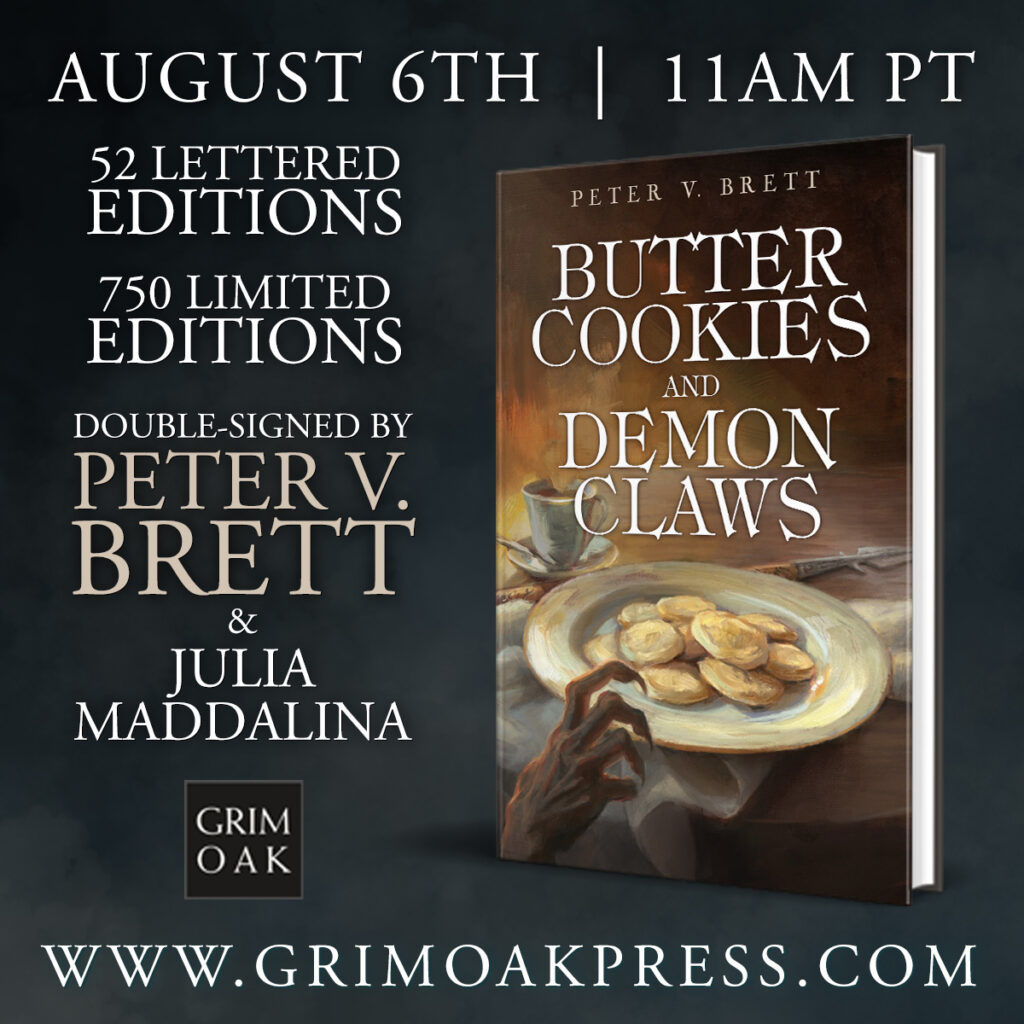
BUTTER COOKIES will publish this December, a fun little appetizer before the release of THE DEMON KING in early 2026, but pre-orders are available now!
In the US, BUTTER COOKIES will be published by Grim Oak Press in trade hardcover, signed limited edition, and super-mega-double-signed-lettered edition. If you’re a collector, note these editions will match the design of the Grim Oak Demon Cycle special edition hardcovers.
In Poland, BUTTER COOKIES will be available this year as part of an upcoming hardcover collection of Demon Cycle Novellas from Fabryka S?ów. Pre-orders not yet available.
I took another creative vacation after turning in THE DEMON KING last month to write another quirky demon cycle novella in a new genre, but this one was… spicier. After 10 years of teasing readers (and myself) I finally wrote a draft of the Elona Paper erotica novella, telling the absolutely filthy tale of how high and mighty Duchess Leesha of Hollow’s parents really got together. Alas, this one may be a little too naughty and off brand to ever publish.
But who knows? Maybe if there’s enough pre-orders for BUTTER COOKIES, it will show me there’s enough interest in these fun genre-bending Demon Cycle novellas to risk ruining my career for to publish the BDSM one.
On April 2nd, to little or no fanfare, I finished The Demon King, the third and final book of the Nightfall Saga—or the eighth and final book of the Demon Cycle, depending on how you look at it. The book has been submitted to publishers who confirm it will be on sale in April 2026.
Normally I would have been teasing this online for months, showing vague chapter headings and talking about the book and having fan art contests and the like, but… social media has felt more fraught than fun these days. The whole world feels unstable lately, and it makes me feel a little like I did in the pandemic. Does anyone care about my silly monster books when the world is on fire?
But there may be another reason I’ve been so hesitant to talk about it, or to celebrate. The Demon King is the last NOVEL in the Demon Cycle setting for the foreseeable future, and whoo… am I having some feels about that.
This doesn’t mean I won’t return to the world here and there, mostly in the form of novellas. Last summer I wrote a cozy mystery novella starring Selia Barren codenamed Butter Cookies & Demon Claws. There isn’t a person in Tibbet’s Brook that hasn’t been cheated at some point by Rusco Hog, so when the richest man in town ends up dead, everyone’s a suspect.
That as-yet-untitled book may be on sale right before—or right after—The Demon King. The events are unrelated, but happen at more or less the same time chronologically.
I have notes for other novellas. There’s Fort Hill, a tale about the time Arlen met Hag Bruna during his Messenger days. He’s been exploring the ruins of Fort Hill, and we see the fall of that once-grand Free City a hundred years earlier in the POV of Bruna, back when she was young and beautiful.
There’s also codename: Fifty Shades of Paper, the Elona Paper novella so sexy it could have its own OnlyFans. It’s all outlined, if I dare to write it.
I’ve also been kicking around ideas for a Gared Cutter novella codenamed: The Boys Are Back In Town, taking place between Desert Prince and Hidden Queen. Middle-aged, out of shape, and lacking self-esteem, he needs to come out of retirement and get the original Cutters back together to fight their way across the desert and rescue Olive, Darin and Selen from the Majah in Old Krasia.
My point is, “done” is relative. Nevertheless, all my grand plans for the world culminate with The Demon King. I started plotting the Nightfall books back when I was writing Skull Throne. I knew then how The Core would end, and the unfinished business the next generation would need to deal with.
Now all those story arcs are resolved. The—surviving—characters all ended up where I wanted them to. Suddenly the project I have been working on for the last 25 years is… wrapped.
Hoo boy.
Let’s talk stats for a bit, while I mentally sort out all my feels about that. The Demon King is my shortest novel, with the first draft coming in at a sleek 154,570 words. Still a hefty boy by genre novel standards, but it’s like Demon Cycle on Ozempic. By way of comparison, the next shortest book, The Warded Man, was 186,000 words in first draft. The rest were in the 220K – 270K range.
It works, though. The Demon King has everything you love—or love to hate—about a Peter Brett book, but it shows the world through an entirely different lens, and moves at a much faster clip.
I started work on The Demon King years ago, but the vast majority of the prose writing was done over the last 29 weeks, where I averaged 5193 words a week. Since before I was first published, that has always been the formula that worked for me. Just a little over a thousand words a day, five days a week. An entirely achievable goal that nevertheless scales up quickly over time if you are diligent.
In 1999 I created a character named Arlen Bales, and now, more than two million words and a literal generation later, I am finishing my last book about his son. How crazy is that? How fortunate am I to have been able to go on this journey?
I created the Demon Cyle, but there is no denying I was shaped by it, as well. By the wondrous places all over the world it’s allowed me to visit. The connections and life-long friends I’ve made in the industry. The writing heroes I got to have cocktails and shoot the shit with like peers. The readers I have had the immense honor to meet and get to know, many of whom now feel like family. The incredible fan art people have given me over the years, treasured magic items I keep close in my pace of power.
In 2024 I went on my first real book tour since 2017’s release of The Core. The Desert Prince (2021) came at a time when travel was still pretty locked down due to Covid, and everything was virtual. The world was on fire, and it felt like the series was lost in the cacophony. Sales confirmed that, even as those of my older books ticked up as quarantined people went back to reading. When Hidden Queen came out last year, I resolved to say yes to everything, go everywhere, to get things back on track, and to reconnect with the humans on the other side of the Big Pile of Words.
And boy, did I. I maybe bit off more than I could chew, traveling almost the entire month of March to tour the US and UK back to back, plus TWO trips to Poland, Croatia, France, and additional conventions in Wisconsin, Arizona and Oregon. And honestly, I am probably forgetting some places. I don’t think I went more than 3 weeks last year without getting on a plane.
It was exhausting, but also one of the greatest adventures of my life. Kind of like writing 8 novels and 5 novellas in a world full of demons. The thing I heard over and over from readers was “I didn’t know you had a new series out” which confirmed how it was buried in the chaos the pandemic. It was nice to feel things were getting back on track.
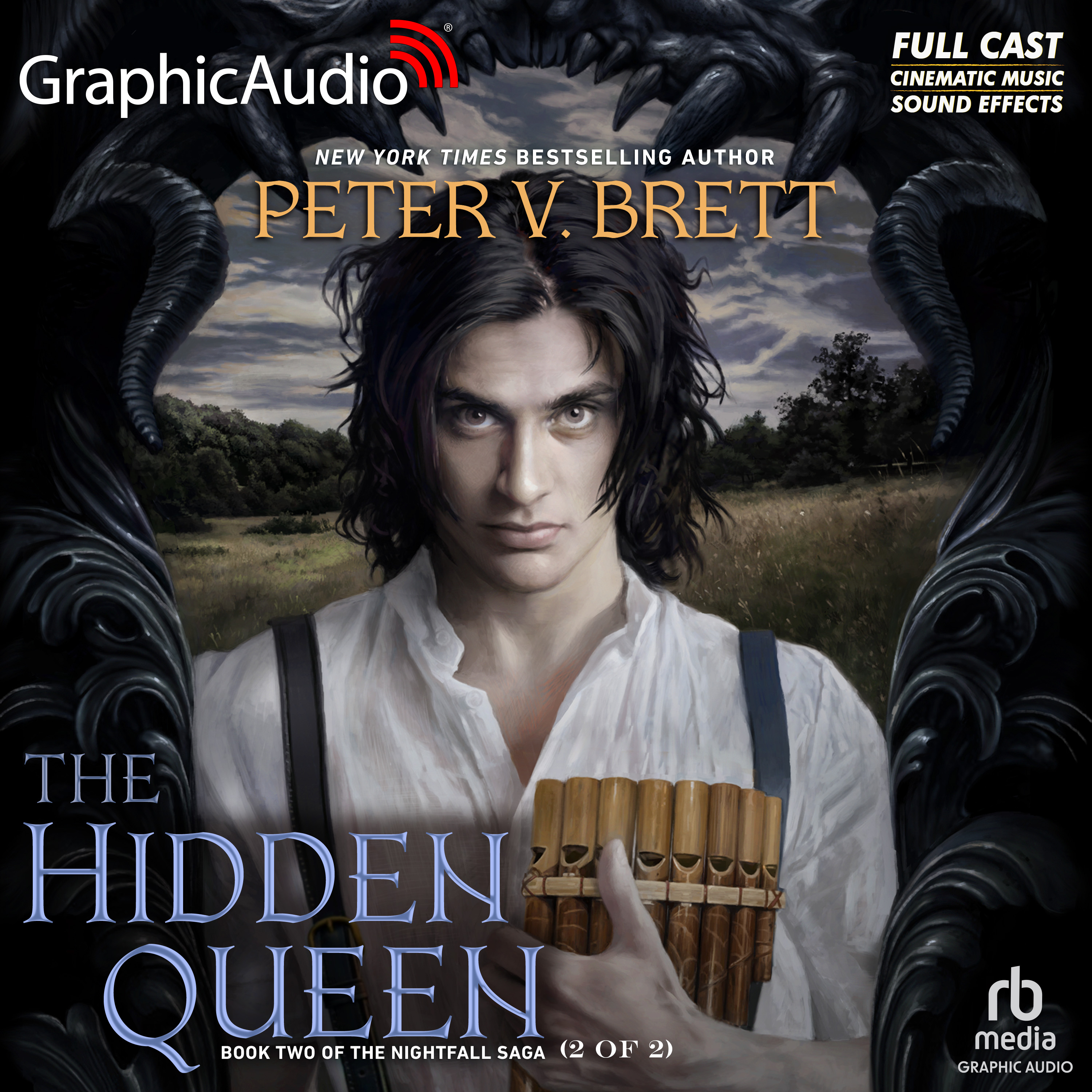
It’s no secret that I highly endorse the full-cast adaptations of my books from Graphic Audio. If you’re a fan, The Hidden Queen part 2 of 2 has also recently been released: https://rbmediaglobal.com/audiobook/9798890557209/
It’s March 20, and I am flying home from the UK after three weeks of almost constant travel. I left home on February 28, just a couple weeks past my 51st birthday. I was heading off on a grand adventure, but there were still demons to fight.
After successfully ending The Demon Cycle, I started work on a new project, The Nightfall Saga, set in the same world, but with new (and in some ways more ambitious) characters set to explore not just their monster-infested world, but more importantly, themselves.
The first book was hard. First books are always hard, but they can be harder still when you’re trying to talk about hot-button issues that have brought down better people than you when handled carelessly. I’ve always tried to thread that needle in my work and this was no different, but the issues were even more raw than those I touched in the original series. Legacy. Neurodiversity. Gender, itself.
It didn’t help that I was trying to make this art amid a global pandemic, while the civil rights marches of our time took place literally right outside my door. Under the constant drone of police helicopters hovering over my apartment building to keep watch on the crowds in Grand Army Plaza. It was hard to care—or think anyone else cared—about my stupid monster books while the world was on fire. But I pressed on and—eventually—came out with a book I was truly proud of.
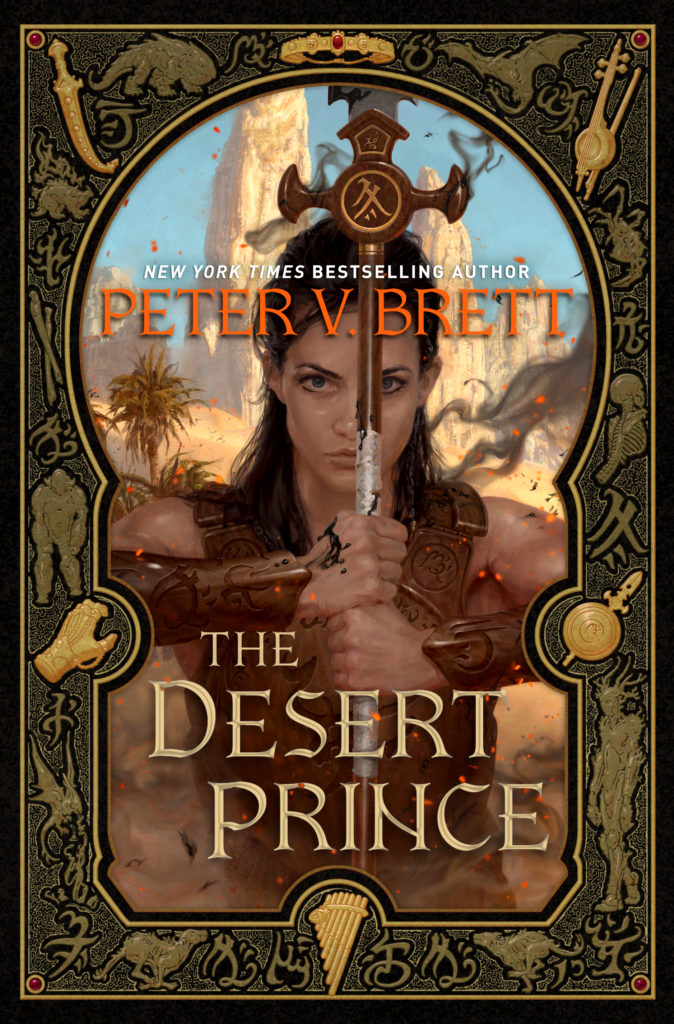
The Desert Prince was exactly what I wanted it to be, a fast-paced, compelling story that skated along the razor’s edge of the discourse. Olive Paper and Darin Bales are not the heroes their parents were. I never wanted them to be. But despite the incredible powers each was born with, their struggles felt every bit as human.
Alas, Desert Prince released in August 2021, in the heart of the pandemic. Stores were still mostly barren of customers, and streaming services were filling the gap. Social media algorithms were suppressing my posts—even to people who had purposely followed me—in favor of suggested content and viral posts that gained traction by being increasingly unhinged. My publishers, too, were struggling just to reach the readers I already had, much less reach out to the new audience I felt these books would speak to. All the major brick & mortar booksellers had merged into a near monopoly, and changed their practices so that many of the ways publishers once got readers’ attention no longer worked.
And of course I couldn’t tour. Who was going to attend live events in the middle of a pandemic? Was it ethical to have them at all? I really wanted to go out and talk about this book, but fate had other ideas.
We did the best we could, producing a beautiful book and doing virtual events and anything else we could think of, but sales of that first book were nothing like those of the previous Demon Cycle novels. Indeed, the thing I heard most from readers was, “I didn’t know you had a new series,” and those words cut deep.
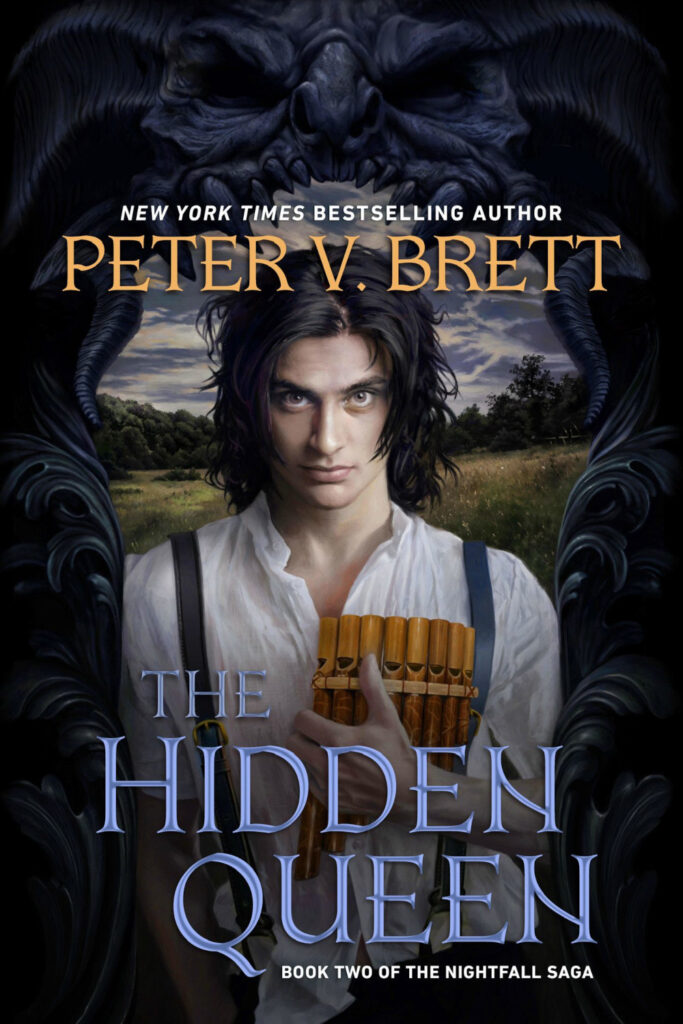
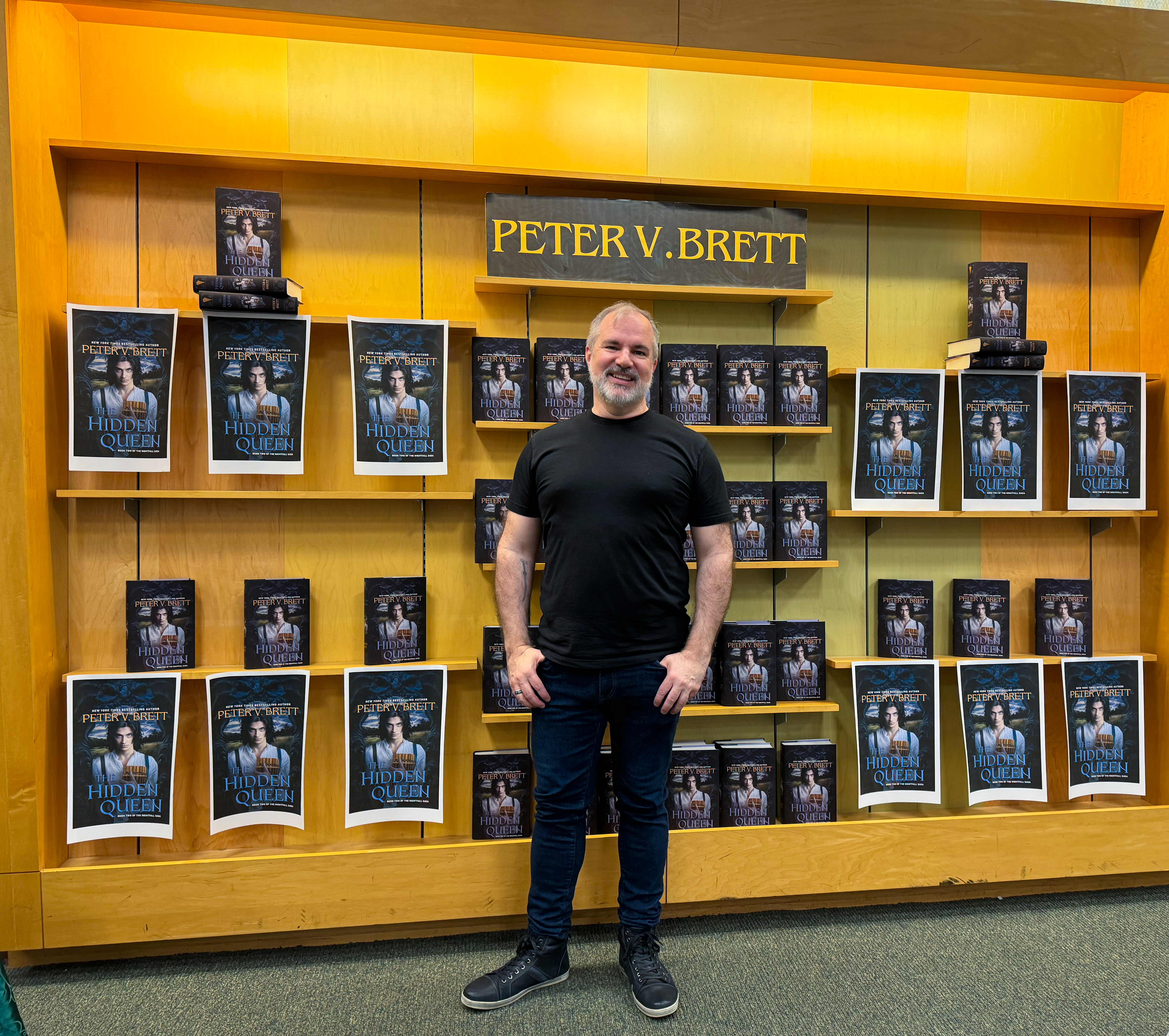
But I pressed on, writing The Hidden Queen, a book I love even more than The Desert Prince. My editors and early readers agreed. The books were good. I just needed to get the word out. So I resolved to do everything in my power to right the ship and get the series back on course. There’s a limit to what authors can do to move that needle, but touring is one of the few that is shown to work… sometimes. Still, I wanted to talk with readers about these books IRL at last, so I promised myself I would say yes to every appearance humanly possible to promote The Hidden Queen in 2024.
But there was another motivation, another truth, beneath that intersection of art and commerce. After spending over a decade building a relationship with my readers here on this blog and in the wider world of social media and public appearances, I felt that connection fraying. Fading away.
Authors are often introverts, and talk of how draining public appearances can be on the social battery. That is absolutely true in my case. But public appearances can also be refreshing and validating. A chance to remind authors that there are real people on the other side of the Big Piles of Words we like to build in privacy. People we care about. People who care about us, or at least the fictional characters and worlds we create.
Appearances also give us chances to spend time with other authors, the only people to truly Get It when we want to talk about what weird fucking jobs we have. We talk about writing, sure, but also what it’s like to effectively run a small business, with our own creativity as the product. We give each other promotion and marketing tips. Gossip about what publishers are really like to work with. Support each other.
Authors live in our feels. We kind of have to, in order to channel them all onto the page. Many of us are neurodiverse, or anxious, or processing things we’re not ready to talk about openly. It’s nice when we find each other, and have a reminder that it’s not just us living with all the ups and downs and changing vibes of the characters we write. Sometimes you need someone to hold your hand, and sometimes you just need them to nod and make you feel Seen. I’m incredibly lucky to have author friends like that in my life, and to have gotten the chance to see some of them again on this tour and put our heads together for the first time in years. I’ve also made some new author friends for the first time in years, and it is glorious.
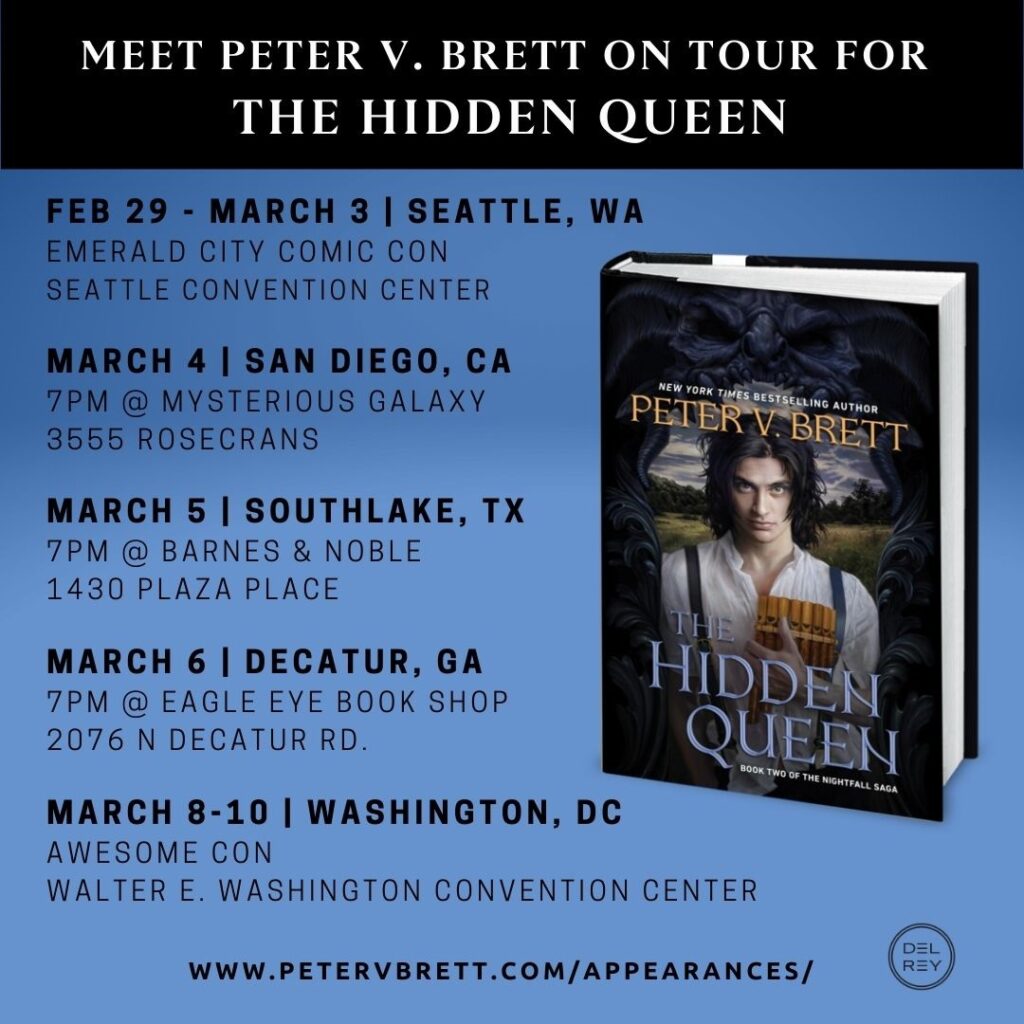
I left New York for twelve days traveling carry-on only, but my pack fu was strong. First stop was Seattle for Emerald City Comiccion, where I got to spend time not just with authors, but much of the US publishing team, as well as booksellers I had not seen in years. There were old friends and new, and started the tour on an incredibly joyful and renewing note. Had real author quality time with Terry Brooks, Robin Hobb, Kat Ogden, Shanna Germain, Katherine Arden, Shawn Speakman, Madeline Roux, Django Wexler, Danielle Jensen, and first met the wonderful Saara El-Arifi in addition to countless other meaningful interactions.
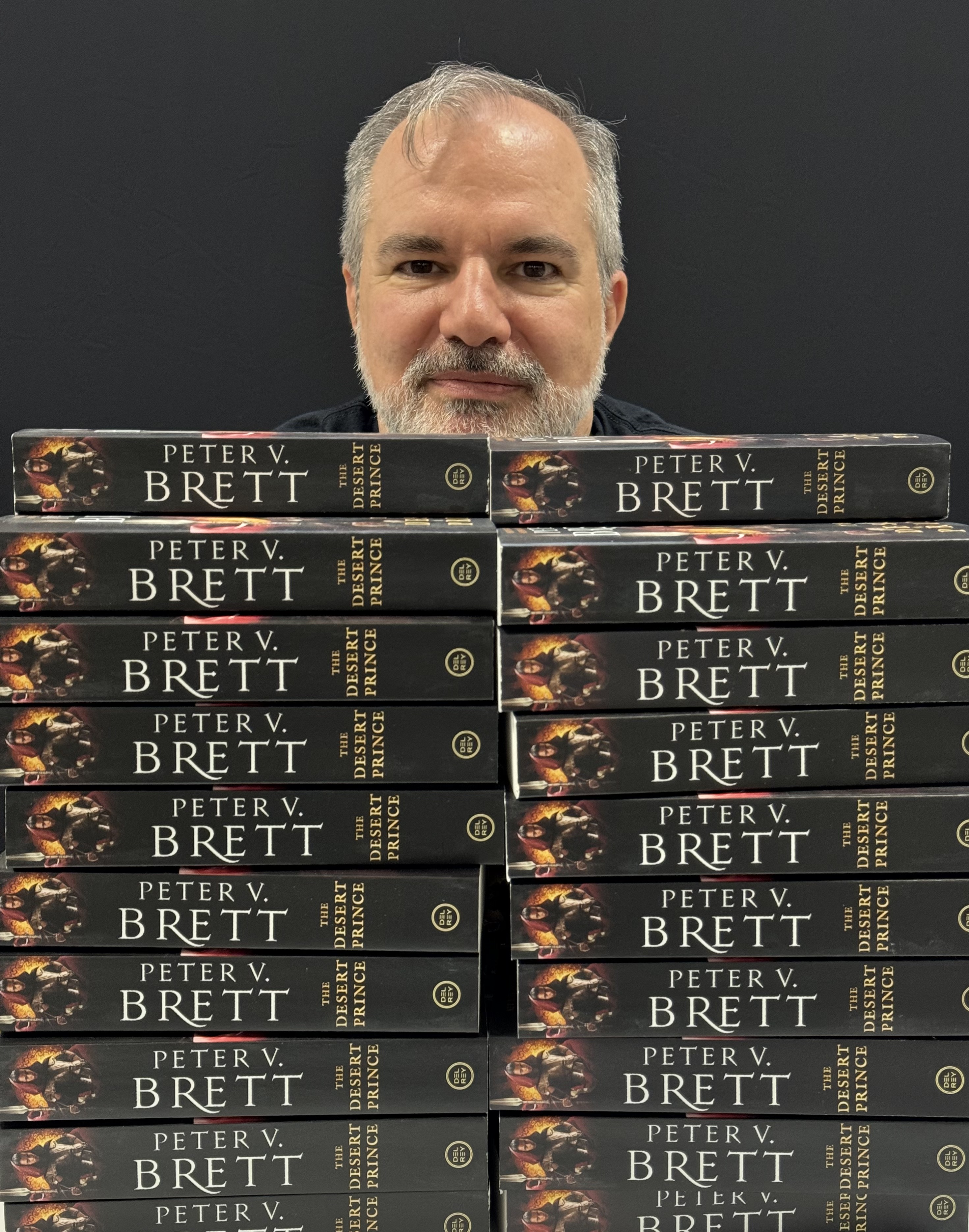
Del Rey gave out free copies of The Desert Prince at my booth signings. It’s one of my favorite marketing schemes. At certain times each day, they give out free paperbacks of the first book in a series, with the author on hand to sign them. It’s a great way for fans to find authors at events, and a wonderful way to find new readers. If a real fan comes up with books of their own to sign, I always give them a free one anyway and ask that they give it to someone they think might enjoy it.
The next year, some of those new readers come back with a stack of books for you to sign, and a friend who would like a free book. That is the Best Feeling. Either way, you feel like a rockstar, because people are always happy to line up for free books.
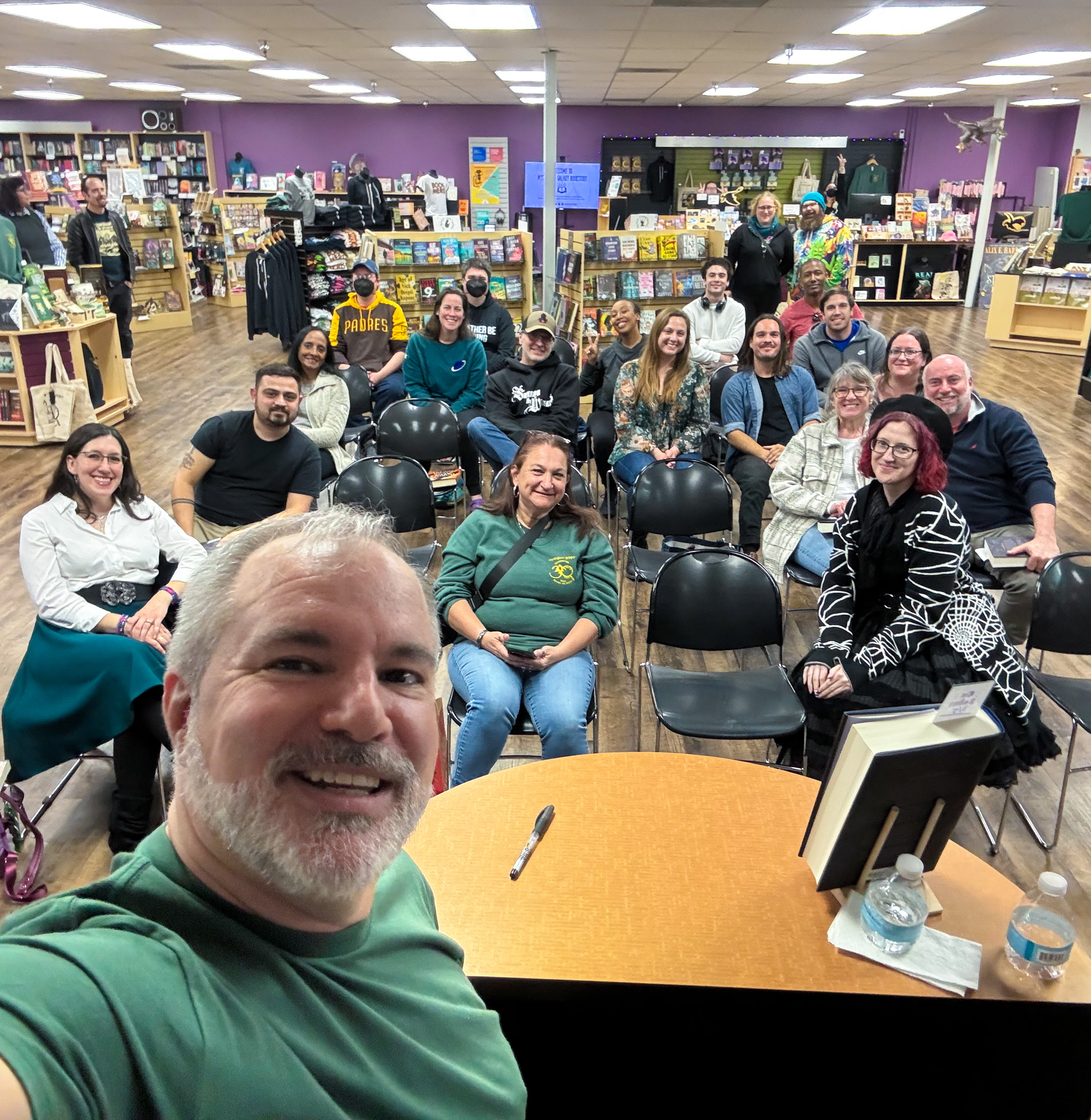
After that I was more or less on Pacific time as I flew to San Diego for my first solo appearance in perhaps 7 years. It was at the Mysterious Galaxy Bookstore, the first US bookseller to offer baby author me support, way back in 2009 when The Warded Man was first publishing. The manager Patrick sent me a case of books to sign and ship back so they could have autographed copies on hand for launch. It was a show of support at a time I really needed it. I have done many events at Mysterious Galaxy in the years since, and it felt like a safe space to try solo public speaking again for the first time in at 7 years.
Hoo boy, was I nervous! It’s different when you’re at a con on a panel with a group of other authors. I’d argue it’s less pressure, because a lot of it is just listening as other authors talk, and the con has a built in audience to some extent, so you don’t feel like it’s all on you to fill the room, and gives you an opportunity to win over readers who might not have heard of you.
But this next event was all on me. Would anyone show up? Would they have a good time? Would they walk away not just having bought a book, but feeling energized to tell their friends that Peter Brett is a nice guy and his books are pretty good? Would I remember all my writing anecdotes from countless other tours well enough to deliver them on command and land the punchlines?
One time, when I was a kid, I was supposed to have a big birthday party in my basement with all my friends. I was wearing a suit. But there was a blizzard, and no one showed up. I remember the slow realization that it was happening, and I have been running from that feeling ever since, even as I dance around the room with it.
People showed up! Some new faces, but also readers I knew well. People I’ve interacted with in person and online for years as we’ve all changed and grown. People I didn’t realize I’d been missing terribly.
Still my nerves were all over the place, right up until that huge surge of adrenaline that comes before I walk out in front of a crowd. Suddenly I can just live in the moment, looking readers in the eyes and asking what THEY want to talk about. Being genuine in my interest and answers. All the funny anecdotes, bits of wisdom and craft techniques (and their accompanying jokes, honed over years on the road) came right back to me. I used to have a pretty tight ten to open events with, but it was out of practice. Still, even when I stumbled, it didn’t matter, because no one comes out to an author event hoping the author will fail. I could feel the crowd’s support, and it made everything easier.
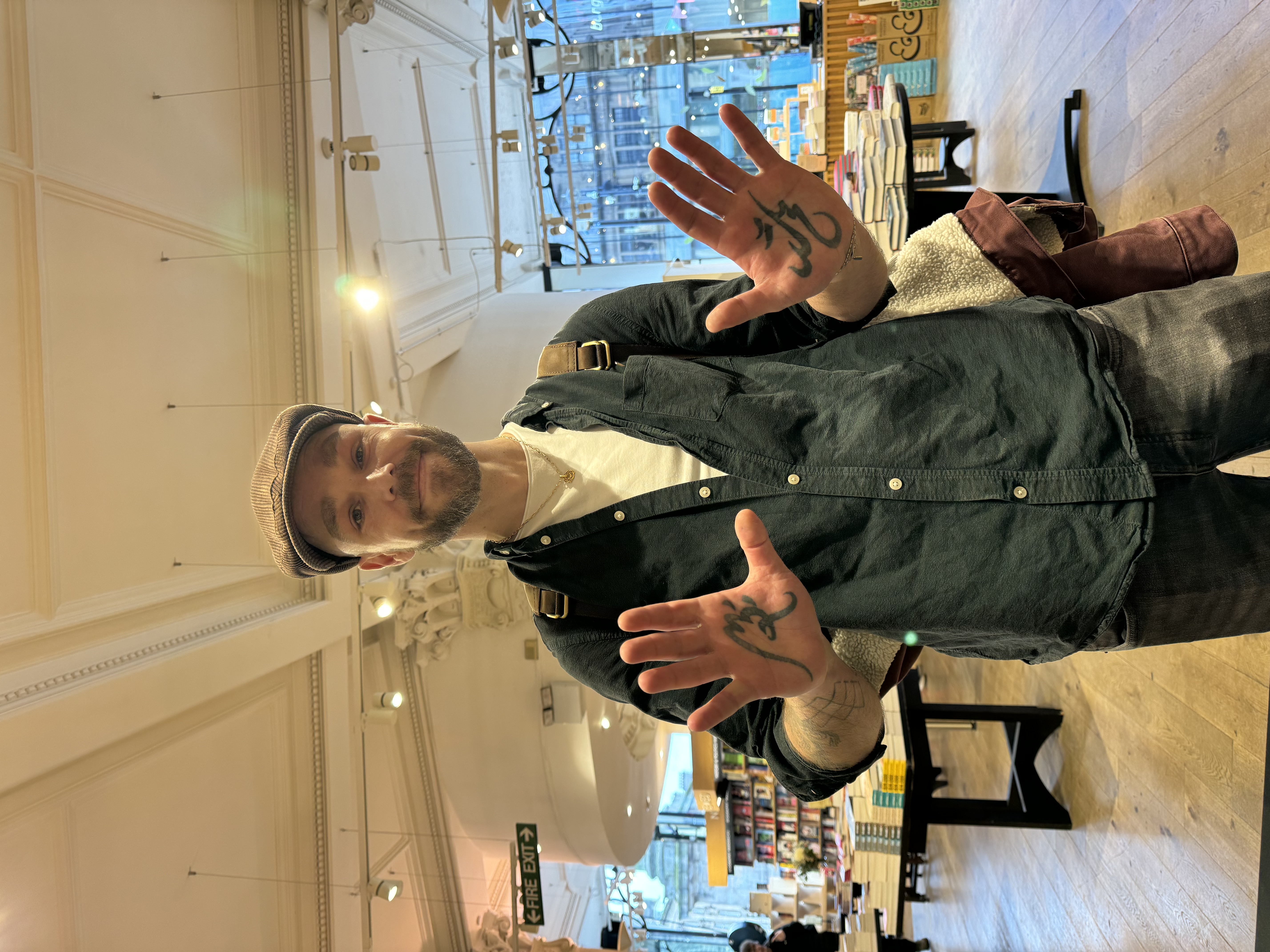
The signing after the talk is just as important. It’s when every attendee gets a bit of face time, and the energy exchange is mutual. Readers tell their own stories describing their relationship with my work. Sometimes they give me fan art, or come in Demon Cycle cosplay. Others show off tattoos, or children (some now half grown) named after my characters. Some just say “thanks, loved the books.” Others want selfies. With me, of all people! I was such a loser in High School.
What the actual fuck, y’all? Is this real life? It’s so humbling hearing how all those feels I poured into my books over the years touched people’s lives. I may be an introvert most of the time, but it’s easy to stay engaged, because each and every reader sincerely moves me. I do my best to make sure everyone feels Seen, even the shy ones who need an extra invitation to look up and chat a bit while I scrawl my name in their books. When people gave me gifts, I made sure to have gifts like Shirepost Mint Warded Klats and Badali Warded Demon Cycle Jewelry to give in return.
I left San Diego the next day for Dallas, Texas driving out to the Southlake Town Square Barnes & Noble for an event. Del Rey had never sent an author to that B&N before, so we didn’t know what to expect. The nerves were back!
Southlake Town Square turned out to be fucking fabulous. It’s this town-sized shopping center with dozens of stores and restaurants, its own streets, plazas, and parks, not to mention its own Hilton Hotel. Damn, Texas! Y’all weren’t kidding about that everything’s bigger business. The bookstore was huge!
But would anyone come? Eeeek. I was dying. I decided to sneak into the bookstore early and just shop around a bit, get a sense of the place and if anyone was coming. Then I heard cheering from across the street, and looked up to see a table of people waving at me from their ouside restaurant seating. I went over, and they said they were just meeting for dinner before the event, and I started to unclench. Then I went inside, meaning to snoop, but was immediately recognized by readers lingering around before the event. The booksellers found me and took me to see the event space, and there were already people waiting. I started talking to them as the others in the store drifted in, informally starting the event like 45 minutes early.
Still, we were all still buzzing by the regular start time, and the hour flew by. At the signing people came up with tattoos, cookies, and stories of driving long hours to get to the event.
Even more, a few random people who had just been browsing the store when I began my talk wandered in close to listen, and bought whole sets of books. The new trade paperback editions of the Demon Cycle have all just come out, and the set is gorgeous. In addition to a genuinely lovely evening, we moved some paper, and then I walked literally across the street to one of the best TexMex restaurants I have ever been to. Such a win. Check with the store if you’re in the southwest and are interested in signed books.
Next day I was back in the airport, and starting to feel it. Packing and unpacking every day, checking in and out of hotels, stressing over car service apps and security/boarding at the airport, then the adrenaline high and subsequent crash of events, not to mention crossing multiple time zones starts to get to you. I flew to Atlanta for the next event in the suburb of Decatur, and discovered my adorable sexy botique hotel was a landmark building, famous for having the longest running strip club in Atlanta in on the lowest level. The club has a long and storied history including endless celebrity visits.
As you know, I am a great lover of history, and resolved I should at least stick my head in, after my event. The talk was at EagleEye Books in Decatur, a smaller store in a smaller shopping center. I would have had the usual nerves, but I was starting to get too tired to be anxious. (A mixed blessing on book tour.)
The crowd was smaller that night, but there were friends waiting among them, and everyone seemed to be a dedicated reader of my books. One drove 7 hours from Kentucky to attend! Others had driven 4+ hours for the event. Each way! It was a more intimate night, but the energy was still amazing. Eagle Eye has signed books in stock!
Back to the airport the next day to fly to DC for AwesomeCon, feeling dehydrated and exhausted, but that was just a travel day. Once I got to the hotel I was able to go buy some salads and other supplies and had a solid 18 hours of quiet time to rest and recharge.
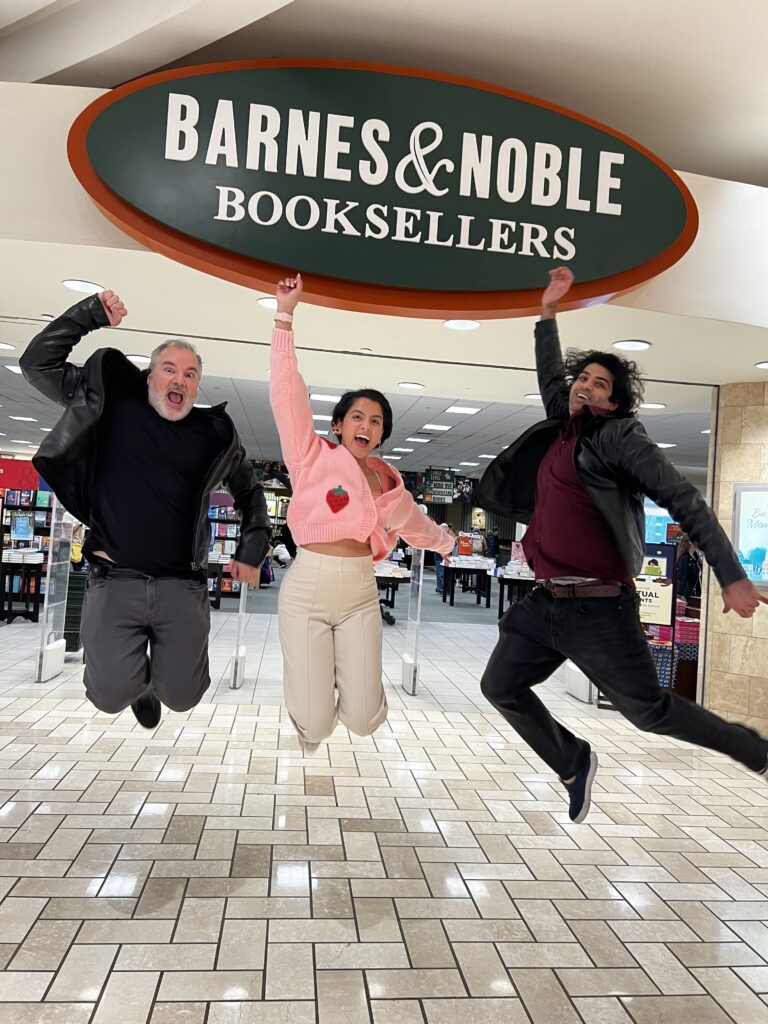
Lots of amazing readers and author friends were at AwesomeCon . I was able to spend some quality time with R.R. Virdi and Aparna Verma, going to see Dune 2 and getting up to signing antics at a nearby B&N, in addition to the usual panels and post-panel signings.
Loyalty Bookstore sponsored the signing events, and should still have some of my signed books in stock if you ping them and ask.
Then ~3 hours on the train back to NYC, and another 45 minutes on subway, and I had 46 hours at home. Just enough time to unpack, launder, repack, see my trainer once, and remind my family I still love them before I was back at the airport on my way to Scotland to kick off my UK Tour.
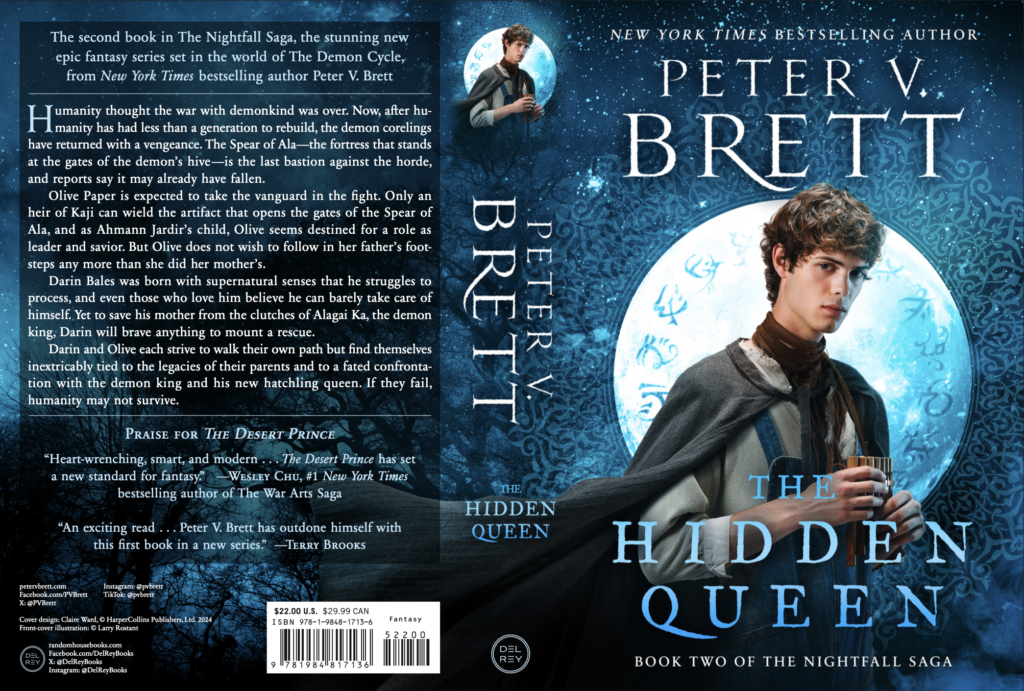
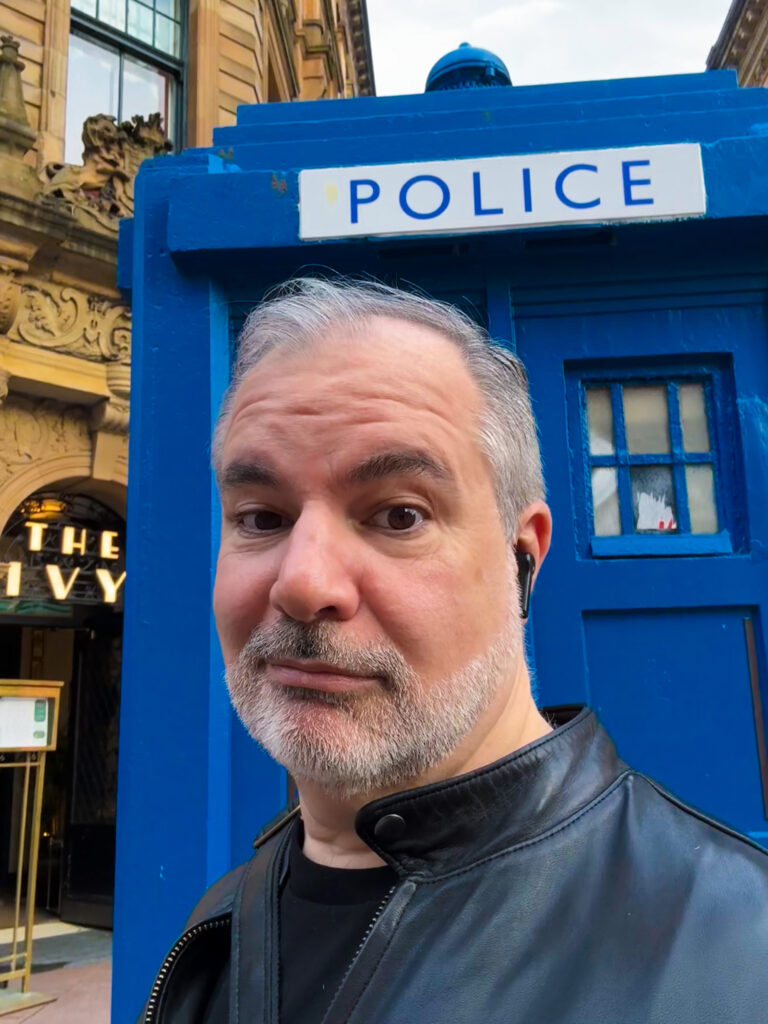
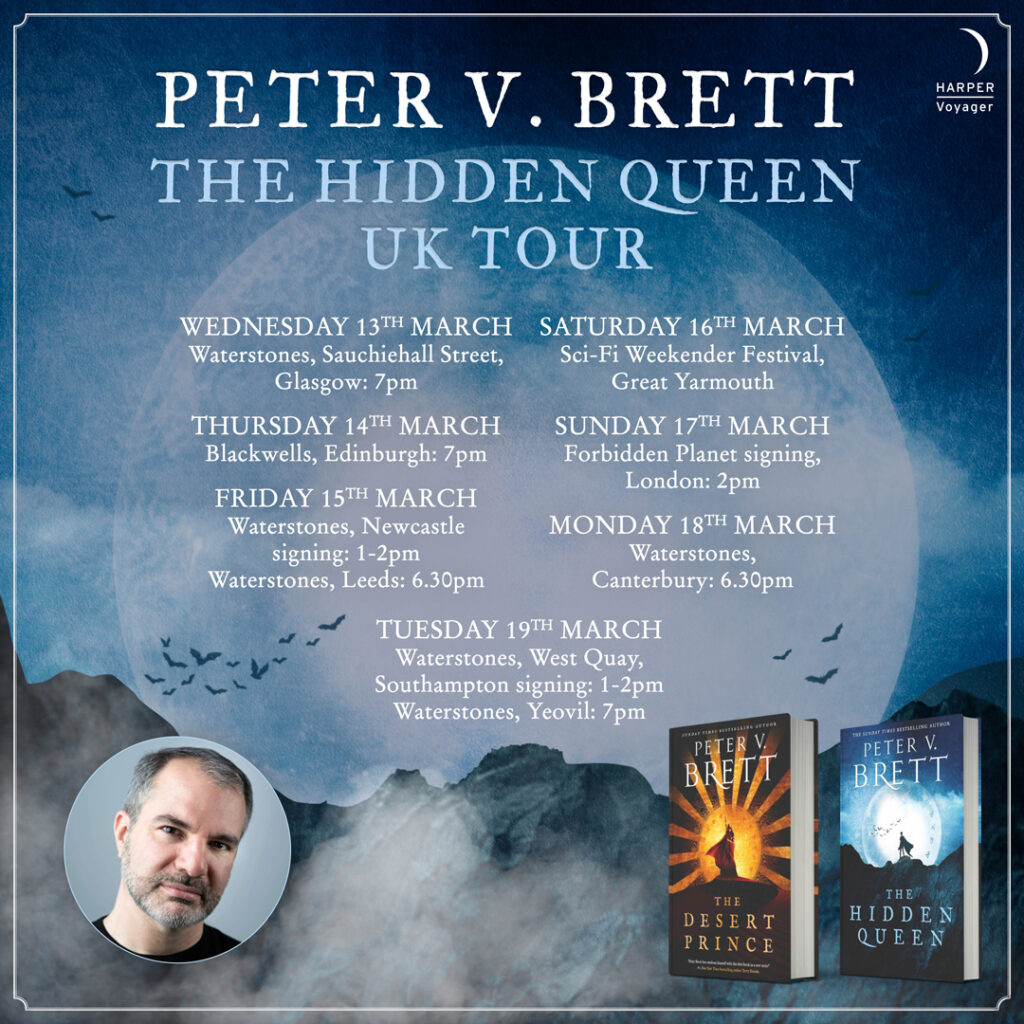
The Hidden Queen officially launched on the 14th, but I took a red-eye on the 12th to arrive in Glasgow on the morning of the 13th, running on ~4 hours of mediocre plane sleep and determined to stay away through an evening event at a favorite stop of mine, Waterstones Sauchiehall St.
Due to a trick of Daylight Savings Time, there were only 4 hours time difference between NY and the UK, and I needed all the help I could get.
I had a few hours to spare that day, and confidence was high. I mapped the local bookstores and used them as an excuse to walk around town, stealth-signing books. The big Waterstones is a historic building, and the booksellers there have always been incredibly supportive.
For some reason, my books do better in the UK than in the US by a pretty wide margin. I have theories as to why, but it’s all just guesswork. Regardless, the crowd was larger than US events, a trend that continued throughout the tour, driving off that blizzard birthday feeling. Anyway, what a great night. I even went to sleep by midnight and took a pill to make sure I stayed that way.
I had time the next morning in Glasgow for a full Scottish breakfast, which was slightly different from the full English breakfast I adore. They gave me haggis in place of the blood pudding, which is a plus in my book, but left out the beans! Plus removed.
Then it was off to Edinburgh, with several stops along the way to meet booksellers and sign stock, leaving a trail of signed books like the Johnny Appleseed of fantasy.
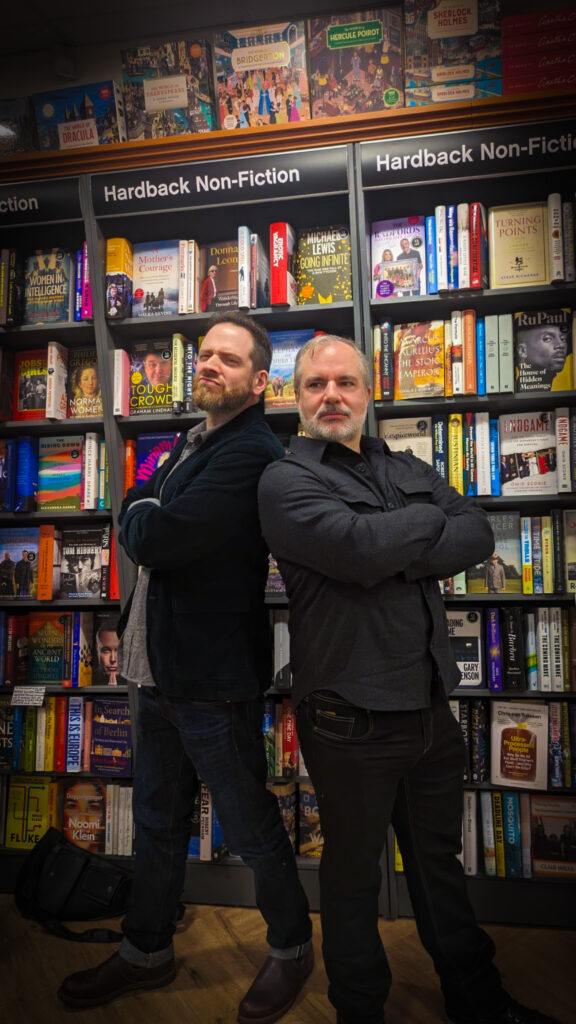
Forbidden Planet Edinburgh said I was the fastest signer they had ever seen. Toppings staff were delightful, and they let me pose on a rolling ladder like Belle from Beauty & the Beast.
We stayed in by far the fanciest hotel of the tour, and the event that night had close to 50 people. The Blackwells in Edinburgh is such a beautiful store, and Matthew was an amazing host. They had couches up front for readers to lounge while I gave my talk.
The next morning, we drove ~3 hours to Waterstones Newcastle, where a tidy queue had formed for a lunchtime signing. That filled a solid hour, once again with a mix of familiar readers who feel like extended family, as well as readers I was able to meet for the first time.
Then we did some more stock signings, and drove another 2 hours to Leeds, where I had 90 minutes at the hotel to take a shower, shave, put on clean clothes, and slap myself awake. Jet lag always hits hard on day 3.
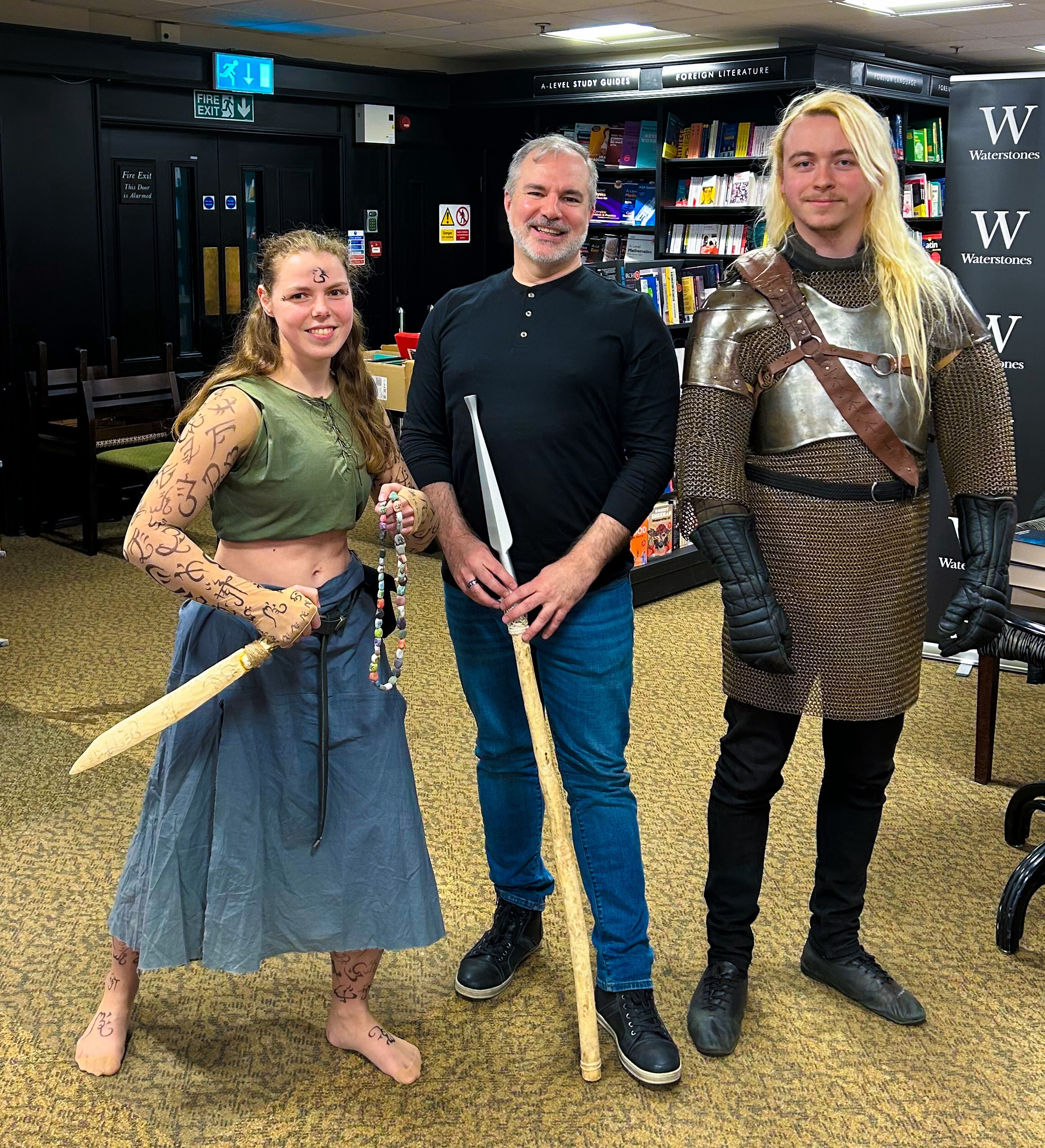
But Waterstones Leeds! Y’all were fantastic! We had a huge crowd with beloved friends, and amazing cosplay. And I didn’t have to handle the talk solo, as I had the pleasure of being interviewed by the amazing author Charlotte Bond also known for the Breaking the Glass Slipper Podcast.
Charlotte really did her homework before the interview, reading all the books, asking if there were any topics in particular I wanted to discuss (there were), and writing amazing questions. She even sent most of them in advance! Shockingly professional and a delight to talk to, as was the crowd during Q&A.
After dinner with friends, I had a hard time sleeping in Leeds. Some of it was jetlag and adrenaline waves finally catching up to me, and some of it was that Leeds is a bit of a party town, and goes from social drinker to sloppy drunk in the 2-4am range on a Friday night.
I was plum knackered by the time we checked out the next morning for the 4+ hour drive out to Great Yarmouth for SF Weekender.
I’d barely had time to stretch my legs and use the loo before I found myself on stage, being asked smart questions about gender and neurodiversity in my books by Dr. Tim Rideout, another devastatingly well-prepared interviewer who challenged me to be my best and I love him for it. It didn’t hurt my confidence that I saw a pair of Damaji’ting cosplayers in the front row. <3
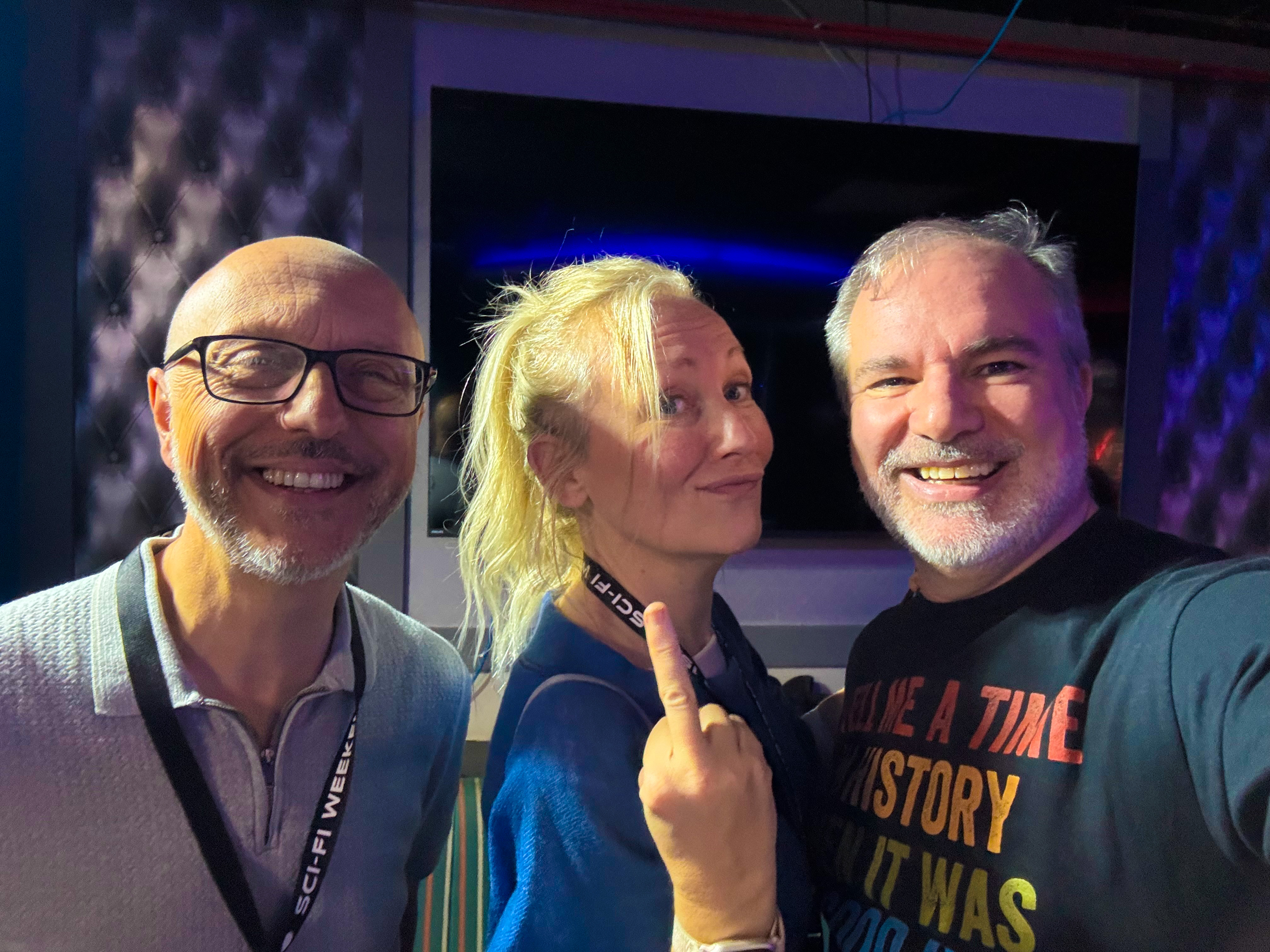
More chances to meet longtime readers and entice new ones, plus I got to spill a whole kettle of hot tea with the amazing and delightfully rotten Sarah Pinborough. For once, I could curse like a New Yorker with another author while we compared all the notes before she went on a live “Just a minute” panel to the joy of a packed room full of cosplayers.
Overnight accomodations in the caravan park were comfortable enough, but again, the jet lag was real, and I was starting to feel sick from the daily adrenaline waves. I remembered the feeling and knew it for what it was, but it still had me walking around in a bit of a daze.
Another ~4 hour drive back to London, slam into St. Patrick’s Day parade traffic. I ended up getting out and walking the last blocks to the hotel. Alas, they didn’t have a room ready for me to freshen before my 2pm event, so I had to make do with the lobby restroom, then tried to be constructive, hitting Waterstones Piccadilly and Hatchards for solo stealth signing before going to Forbidden Planet. I had to wade through thick crowds of green-clad revelers, and skip across gaps in the parade to get to the stores and back, by which time I was late and ended up having to hustle a bit to get to FP in time. Showed up dazed and sweaty, breathing hard and exhausted. My author bestie Katherine Arden, fresh off a tour of her own, found me there, and she could at least say she Got It, which I needed to hear.
Forbidden Planet was amazing, but the adrenaline crash afterward was brutal. Thankfully Katherine, my agent Joshua, and my old college friend and webmaster David were on hand to shuttle me off someplace where I could stare into space while they put food and coffee in front of me.
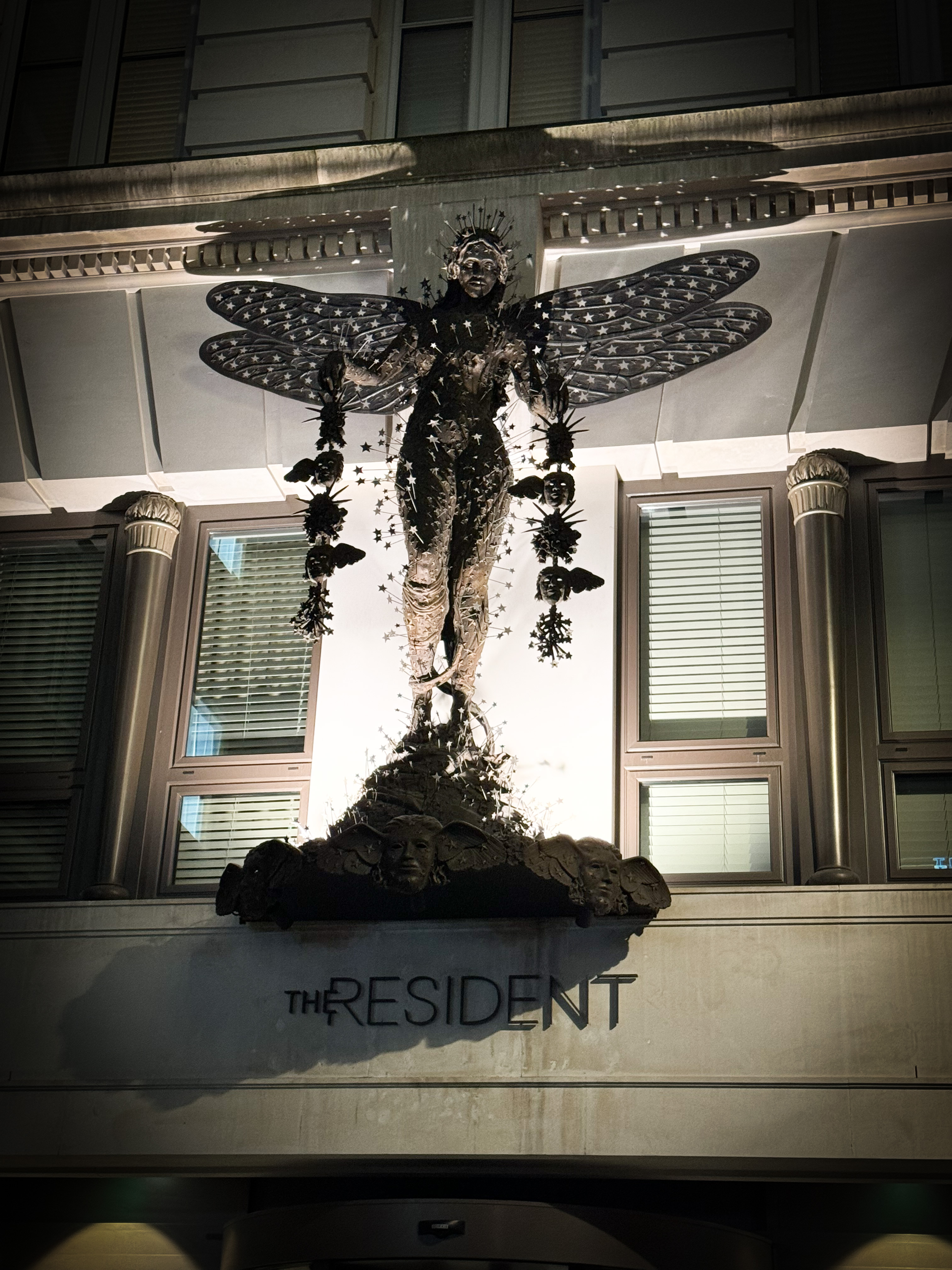
This statue of the moon goddess Selene protected the front of my hotel like a ward circle. The drunken St. Patty’s sidewalk revelers stopped abruptly a block away. Coincedence? I think not.
Of course then it was back to work, stealth signing at Foyle’s with Katherine and then finally checking into my hotel, changing and going right out to dinner with a diverse assortment of London friends who turned into an amazing social stew.
After that I hid in the hotel, exhausted but not tired. I just couldn’t people anymore. I took a blazingly hot shower and then dumped out all the bags I had been living out of for a week, reorganizing everything, and my mind along with it.
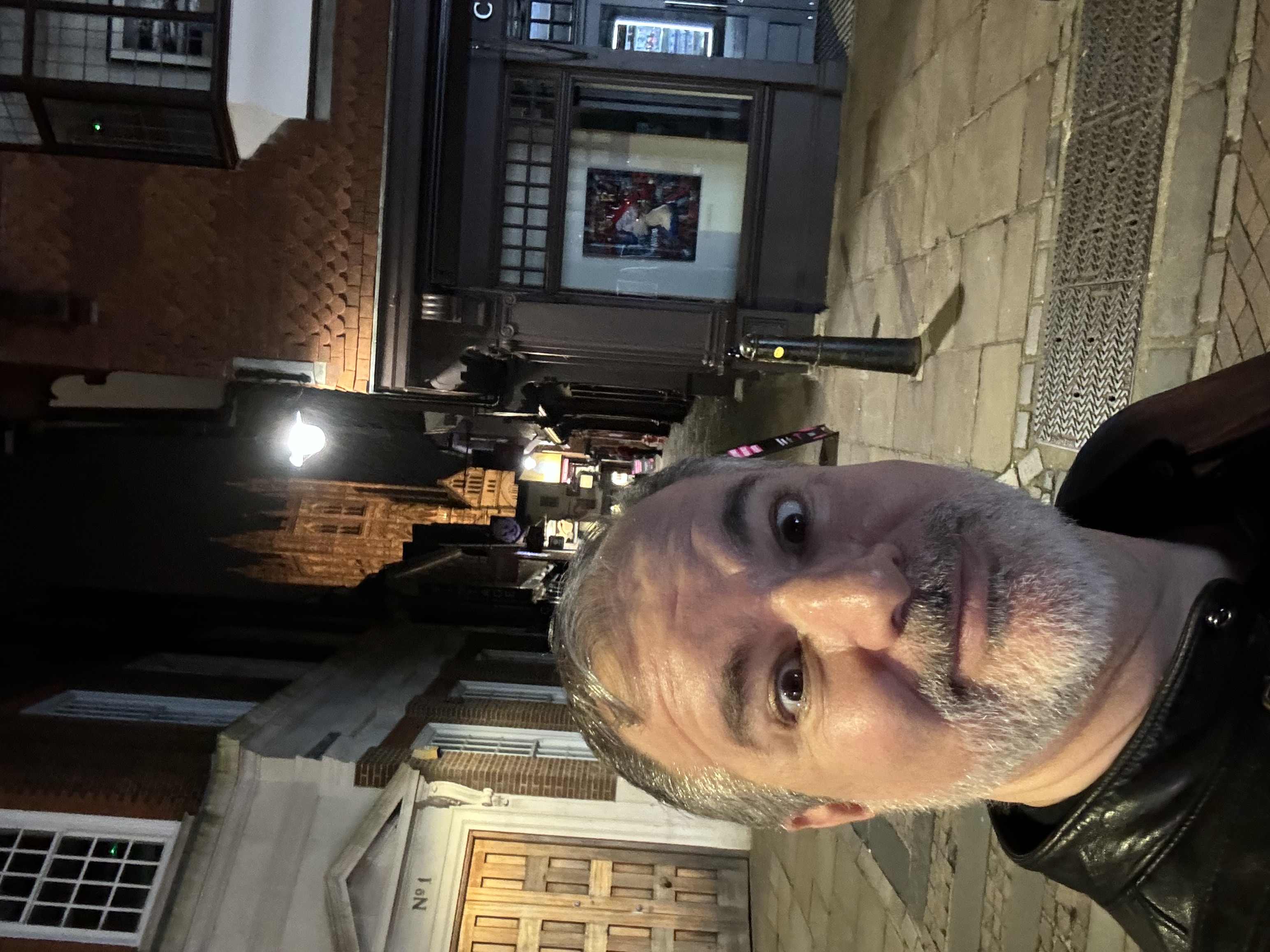
After that my publicist and I snuck off to do stealth signing at Waterstones Trafalgar Sq. and Waterstones Covent Garden. From there we went to a lovely luncheon with the HarperCollins team, which I always love, then had a ~2 hour drive to another absolutely wonderful event at Waterstones Canterbury. I had passed tired, and lived permanently in a place beyond it now.
Next was Forbidden Planet Southhampton, followed by another proper british queue ready for my lunchtime event at Waterstones South Quay, which was filled with emotion and amazing readers.
Only one more to go.
But this one, I wasn’t worried about. It didn’t matter that I was tired. I was ending the tour in conversation with my good friend Joe Abercrombie, who I haven’t seen in far too long.
Joe is quick of wit and always goes for the laugh, and that was exactly the energy I wanted to close out on. Joe and I had a half hour to catch up privately in Waterstone Yeovil’s back room before coming out and mostly just shooting the shit in front of a crowd. Joe had some smart questions prepared, as did the crowd.
Sometimes the discussion got serious, but we always threaded in punchlines, and by the end, my face had that achy feeling you get sometimes when you’ve been laughing all night.
There were even treats! author E.L. Armstrong baked warded caramel shortbread cakes to share and they were amazing.
Damn, UK. You still know how to show this silver-haired American dad a wild rippin’ time. I’ll miss you until next time. <3
I get six weeks off, but the tour isn’t over! Flying to Zagreb, Croatia for SFErakon in May, followed soon after by Phoenix Fan Fusion.
I’ll be at Pyrkon in Poland in June, and then Rose City ComicCon in September. GameHoleCon in October and then back to Poland in December for the Warsaw Fantasy Fair. Somewhere in there I am supposed to go to France and Germany, too. News on that when I have it.
In the meantime, please enjoy the new book. It’s very dear to me, and I hope it will be to you, too. Thanks for coming along on my great adventure.
After tour plans for The Desert Prince fell apart in the pandemic, I feared I would never again take part in this sacred ritual of the book launch. I built up so many relationships with readers in different countries and towns all over the world with repeated visits, it felt like a huge part of my social life had been cut away. I haven’t been on a proper international book launch romp since 2017. I missed those of you I used to see terribly, and am hoping to see many of you again this year, and perhaps some new faces as well.
You can find all the tour dates and links to get tickets/preorders (for those venues that require it) here: www.petervbrett.com/appearances
This is also a great chance to give you a sense of what to expect from one of my events. I’ll repeat most of this stuff in person (hopefully funnier) at the actual events.
First off, I don’t do readings. Y’all know how to read, or you probably wouldn’t be at a book launch event. If I’m gonna come all that way for us to get together, we’re going to make it interactive quality time. I usually sneak out before the event starts and take some selfies with anyone already waiting; kiss books, sign babies, etc.
Then at the start time I monologue for 10-15 minutes, starting with a request that everyone try to think of one question they would like to ask me (that does not involve shouting out the name of a character I have killed). We’ll circle back to that soon. Then I do the standard stuff—thank the store and all the attendees, encourage you to buy something on your way out to support bookstore events, give guidelines for the event, etc. I try to work in some laughs and cheap thrills, like a Jongleur with a bag o’ marvels.
That’s when your questions come in. Don’t leave me hanging, fam. I want to talk about what you’re interested in. Deep dive into sharusahk? I’m here for it. Was there an unused draft of The Warded Man where Rojer and Leesha end up together? I can confirm or deny. Questions about movie deals, audiobooks or writing in general? I’m all yours for ~45 minutes, and swear to speak only honest word.
After that we get to signing. Folk are asked to form an orderly queue, and sometimes the wait can be a while. I apologize for that. But one of the most beautiful things I’ve seen in this career—and it’s happened again and again—is the camaraderie that forms between the readers waiting in line, sometimes blossoming into friendships that last beyond the event. What? We live close to each other and like the same stuff? What are the odds?
When it’s your turn in line, you will have my full attention for 1-2 minutes. More if the crowd is small. Got a question? Lay it on me. Want a selfie? I’m your huckleberry. Sometimes I’m at a little table I can easily get up from. Sometimes I am stuck behind it. Either way we can make it happen.
Want me to sign more than one book? No problem. Even if you have every novel and novella, which is (!!) 10 books total, I can handle that in 1-2 minutes. Don’t worry your pretty head about it.
If you’ve got more than 10, you’re still cool, just be considerate and keep something like at the end of the line. I won’t leave while there are still books to sign. If the store closes and kicks us out with some people still waiting, I’ll sign out in the parking lot until it’s done.
I’m not doing you a favor by being there. You’re doing me a favor by showing up. When I am at an event I am there to serve. It’s increasingly rare for authors to tour at all anymore, and I am immensely grateful for the opportunity. Who knows, by the time I finish my next book you may just be able to ask ChatGPT to tell you dumb jokes in the style of Peter V Brett and there won’t be a need for me at all. I’m gonna make the most of it while I can. I hope you’ll join me. And bring a friend who likes fantasy and bad jokes.
One last thing: If you can’t make it to an event, remember you can always call the store and reserve a copy for me to sign while I am there to be picked up or shipped to you later. This is standard practice at most every bookstore, so don’t be shy if you want a signed book but can’t find a sitter, or are stuck at work.
Posted on January 25, 2024 at 9:47 am by PeatB
Filed under Appearances, Events Comments Off on Book Tour!