Blog

The Daylight War Stage I: The Stepsheet
wardcircle_invert_web

A lot of people, usually other writers, e-mail me asking questions about my writing process. Love love love to talk process, we writers. I’m not sure where the fascination comes from. I wonder sometimes if it has something to do with all of us feeling insecure. Like deep down, we all feel like we have no idea WTF we are doing, and that other writers have their acts together better than we do. But when we talk to them and see that their processes are as weird and neurotic as ours, it makes us feel better.

Or I could just be projecting my own feelings on other writers to make myself feel less crazy. Who knows?

Anyway, this post is about my writing process. I’ve been thinking about it a lot lately as I map out my strategy for writing The Daylight War, attempting to apply what I’ve learned from writing my last two books. If you’re not a writer, this post will probably bore the crap out of you. Apologies in advance. Feel free to skip it.

If you are a writer, you may find this post interesting, but odds are it won’t help you with your own writing. Each of us accesses our creativity differently, and while I do believe that you can train yourself to access that creativity on command in some ways, the Dark Gift is different for each of us, as they say. Some writers are detailed outliners. Others just make everything up as they go along. It runs the full spectrum in between, and there are bestselling writers on both ends and at various points betwixt. It’s not for me to say which is better. I believe writing style is related at least partially to how our minds organize information, and that is based on the unique mix of biology and experience in each of us.

For myself, my outlining process has gotten increasingly OCD over the years, but therefore also much more precise. The first draft of The Warded Man was written very freely; I pretty much made it up as I went along. Arlen’s core journey in that book is essentially unchanged in the final version, but Rojer and Leesha did not have their own POV sections, and the events after all the characters came together went right off the rails. The ending of the book was lackluster and useless, and set up the story to move in a direction I didn’t want with the second book. It’s no wonder why no one wanted to represent that manuscript.

I knew that I had a good world and good characters, but by not planning ahead, I had written myself into a corner. I understood where things went wrong, but correcting the problem meant throwing out about 60% of he story. Literally YEARS of work. I had started the book in 1999, and this was almost 2006. Part of me wondered if it was worth the effort to try and fix it. I thought maybe it was time to stop throwing good money after bad, scrap the whole demon world thing, and do something new.

But for my love of the characters and their world, I decided to stick with it. I took an axe to the manuscript and hacked out huge chunks with a cold butcher’s heart. I hacked and hacked until only the bare skeleton of Arlen’s life journey remained. I then started an outline fresh from the beginning, writing fairly detailed bulleted notes in-between those remaining chunks of prose to list what I wanted to accomplish with each scene, why it was necessary, how it moved the story forward, etc. I broke those notes into chapters and threaded Rojer and Leesha’s tales in and around Arlen’s, finally bringing them together in a way that gave both a satisfying conclusion to each of their personal stories while leaving them in the place I wanted them to be when the next book picked up.

I called that detailed story skeleton my stepsheet. Not sure where I got that word. I think I heard my buddy Matt use it once, and it stuck with me.

Once the stepsheet was done, I broke out the first chapter as a separate MSWord file and synced it to my smartphone. Each day on my morning and evening 45 minute subway commute between Brooklyn and Times Square, I pecked away with my thumbs writing the prose. Thanks to the stepsheet, I could focus wholly on character interactions and emotions without having to worry that the plot would go awry.

Each night, I would sync that file back to my desktop computer, fix the numerous typos, and pick up where I left off with the prose. When I finished a chapter, I would paste it into the main file and then break out the next one in line, tweaking the notes as needed. I would do that until I felt burnt out and crawled into bed, usually at around 2am. Up again at 7:30, later, rinse repeat. I did that for about a year.

It wasn’t fun. I would much rather have spent that subway time been reading comic books, or fantasy novels, or watching movies on my iPod video. But I wanted to write a book, and if there’s one thing I can honestly say about myself, it’s that I can be damn stubborn when I set my mind on something.

When it came time to write The Desert Spear, I was even more detailed. I felt enormous pressure to create something that appealed to fans of the first book, but without just regurgitating the same formula, and to continue to challenge myself as a writer. Wanting to leave nothing to chance, I wrote a VERY tight stepsheet that listed every event great and small throughout the book, including the dynamics of character interaction, the emotions of the POV character and those around them, background information, and large chunks of dialogue. I did all that before I ever started on prose. That way, I never needed to worry about the big picture, and could just focus on my brushstrokes.
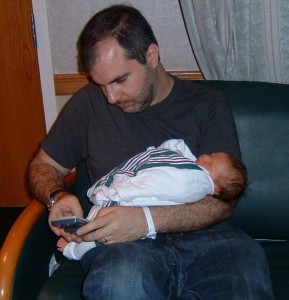
july08still_working1That detailed stepsheet was more tedious and took a lot of the fun out of writing. It was also slow, and ended up delaying completion of the manuscript for a few months beyond the estimates I originally gave my publishers, which is something that no one, especially me, wanted.

But I felt it was more important that the book be my best work than be completed quickly. For all the downsides, the stepsheet gave me the level of control I needed to tell a far more complex story than that of the first book. I honestly don’t think I could have pulled off otherwise. Especially since not long after the stepsheet was completed, my wife and I had our first child, and I wrote most of the prose with bleary eyes between the baby’s bi-hourly feedings or night terrors, sometimes with her sleeping in my arms.

There no doubt in my mind that I was able to achieve all my goals with The Desert Spear because of the stepsheet, and I really think TDS is my best work to date.

For TDW, which is in many ways even more complex than TDS, I’ve been even more careful with the stepsheet. I’ve spent the last six months stepsheeting. Pondering worldbuilding questions. Adding new levels to the magic system. Defining character traits. Working out individual character arcs and trying to thread them harmoniously into an overall story. Plotting fight choreography. Researching random things. Syncing up timing of events in distant places and calculating the relative speed of various forms of transportation. Etc.

But as of last night, it’s done. I have the full Daylight War stepsheet. It is 170 pages long, and it kicks some serious ass.

Stage I complete. On to Stage II: prose. I have no idea how long stage II will take, but at this moment, I feel really confident that the end result will be awesome.

You don’t even wanna hear about stage III: rewrites. That’s when it gets really intense…
Posted on February 18, 2010 at 3:04 am by PeatB
Filed under Craft, The Daylight War, Writing
25 Comments »

The Author’s Catch-22

Aidan at A Dribble of Ink essentially retweeted a post from George RR Martin’s “Not a Blog”, wherein Mr. Martin discusses the current state of the long-awaited A Dance With Dragons, and gives some small insight into his creative process.

Every time GRRM makes a post like this, there is a ripple through the blogosphere as his legions of fans chime in with their opinions about how long the book is taking, some spewing angry bile and vile insult, some strongly supportive, and others actively defensive. I’ve waded into this argument before, and frankly, I’m tired of it and have moved on to other things.

More interesting to me in this post is Mr. Martin’s dancing around what I consider the catch-22 of the obsessive author, and one I struggle with constantly: Wanting very much to talk about something that’s weighing on you, but being unable to for fear of biasing the results. Most people have co-workers at their jobs who they can discuss their work with, but in the same way jurors in trials covered by the news media must be often sequestered so their decisions are not influenced by hearsay or the opinions of others, so too must an author sequester themself to some extent.

Writing giant fantasy epics spanning years or decades with multiple POV characters weaving in and out of each other’s lives can really make your head hurt, especially when trying to line up the chronology of events so that even the most obsessive fan can’t find discrepancy, or trying to figure out how to allow one of your POV characters to witness something important that the reader need to see, but that the character has no logical reason to witness.

Right now I’m finalizing the stepsheet for The Daylight War. It is a detailed file (currently 165 pages), that spells out pretty much everything of note that happens in every chapter of the book. I do this for every book before I start writing prose. I realize it’s a far more obsessive process than most authors use, but it works for me, so I’m not going to argue with results. I’ve been working on the stepsheet for six agonizing months, sometimes exultantly, and other times feeling forlorn and hopeless as the puzzle pieces all over my desk refuse to fit together. Sometimes I think I am kicking the book’s ass, and other times it is clearly kicking mine. The book takes up a MASSIVE amount of my brain’s processing power, and an enormous amount of my time, and yet I essentially have no one to talk to about it.

In some ways, it’s worse with The Desert Spear. That books has been DONE for months. At this point, I couldn’t change it if I wanted, but I still can’t discuss it openly, for fear of giving out spoilers on the internet.

I have plenty of offers from people to take an early look and offer their thoughts. I appreciate this support a lot, and sometimes I am really tempted to take people up on it, if just to help stave off the madness and anxiety, the feeling that I will somehow FAIL. But while every author is different, in my case, the creative journey is a very personal one. My books are MINE. I don’t want anyone, not agent, editor, friends, family, or fans, tossing ingredients into or even stirring my simmering pot until I’m ready for people to taste it. Even then, I much prefer my test readers (including those with a professional interest in my work, like my editor) to tell me what didn’t work for them, and then leave me to figure out how to fix the problems on my own. Nothing aggravates me more than having someone looking over my shoulder and offering advice while I work on something. So as much as I want to talk about it, I don’t want to talk about it.

But it’s lonely. And that makes me sad sometimes.

Posted on February 16, 2010 at 1:31 pm by PeatB
Filed under Craft, Musings, The Daylight War, Writing
10 Comments »

The Circle of Death

park_circle_before

I started this post months ago, and then forgot all about it until a NY Times article my agent sent me reminded me about it.

One of the first acts of the Obama administration was to push forward an economic stimulus bill in an attempt to kickstart a recessing economy. Many detractors said that this is a waste of money. Unnecessary spending that will provide a short term fix that will only further burden future generations.

And these detractors would be dead on, if the Obama administration had just sent everyone $300 or more in cash, or gave away billions to companies and the wealthiest Americans with no accounting of how it was spent, which is what the previous administration did under similar (if less severe) recession indicators.

But this president was more responsible, seeing to it that this “free” money was spent wisely on, among other things, upgrading infrastructure and public works. Things that not only create jobs and feed money into local economies, but which also create permanent value and make our country a better place to live in.

Case in point: my neighborhood.

I live in Kensington, a neighborhood in Brooklyn that has seen economic rise and fall over the years. I’m no historian who can recite the details, but I don’t need to. The facts are embedded in everything around me. The high ceilings, archways, and molding in my apartment building was not built for a slum. This was a ritzy neighborhood back in the 30’s when my building and the others on either side were built.

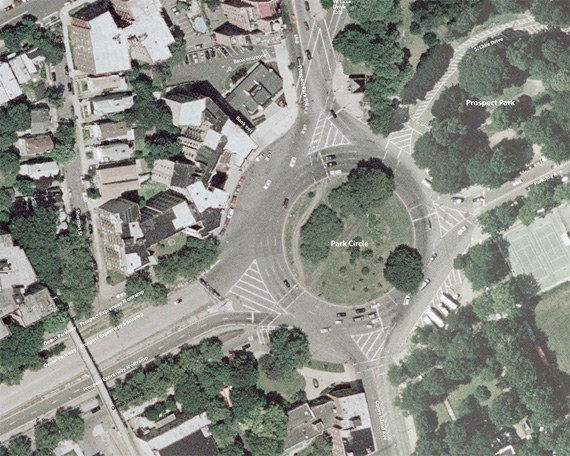
But the next 60 or so years were not kind. When I first moved here in 1997, it was kind of ghetto. Years of neglect had turned my building into a weak shadow of its former grandeur, and made the neighborhood an often frightening place to live. I was beaten and mugged once, and attacked by a gang of teenagers another time, both incidents barely a block from my front door. Home robbery was a real threat, and there were heavy bars on every window. And for access to the park or highway, whether by bike, foot, horse, or vehicle, you had to cross The Circle of Death.

The Circle of Death is the roundabout intersection of Coney Island Ave, Prospect Park South, The Prospect Park traffic entrance, Prospect Park South, Prospect Avenue, The Prospect Expressway entrance, Fort Hamilton Parkway, and Ocean Parkway. It was a maelstrom of activity with a safety island in the center, but no walk signs to tell one when they had time to get to it. Walking through that to access the park was like playing a game of fucking Frogger, with you as the corespawned frog.

New Yorkers are not good with traffic circles. We are an impatient, irritable bunch, and the best of us flout traffic laws constantly, not because we are bad people, but because it’s the only way to friggin’ GET anywhere without it taking 5 hours because of traffic congestion. The Circle of Death is like the neighborhood dragon. There are accidents and terrifying near-misses there all the time because assholes have no idea how to drive through a traffic circle without behaving like a fucking savage. People will cut straight across 4 lanes of traffic without so much as a signal if they think it will save them ten seconds.

But I fell in love with this neighborhood anyway. It had good bones. The rooms in my apartment were huge, and filled with closets. I could walk to the park. Or the movie theater. Or the Brooklyn Botanical Gardens. Or the parade ground/ball field. Or the Brooklyn Museum. The horse stables. Or the trendy restaurants in Park Slope. It didn’t take a genius to see that this old girl was ready for a comeback, and I put my money where my mouth was and bought my first home, right here.

And I was right. Things got better every year for a while. It became a haven for yuppie website designers, artists, and hipsters. TV producers and middle-management PR people. Smarty-fart fantasy writers. You get the idea.

Shops were opening to service the new residents, and the streets got safer. Subway service improved, and abandoned buildings were torn down with plans to build new ones made.

But then came the dark times. Then came the empire. The general middle-class economic growth required to sustain the improving area halted, and then began to reverse. Building projects to improve the neighborhood were halted as developers went bankrupt and were foreclosed on by banks that then went bankrupt themselves. The construction sites became dangerous rotting wounds, oozing foul pus into the community. I started hearing about local robberies again, and several budding shops were forced to close their doors.

I was trying to hold faith, but after Cassie came along, I really started to reconsider the old girl, and wonder if I should move on and raise my little angel somewhere where she can play in a big backyard in a safe neighborhood.

I decided to hold on just a little longer. Prices for suburban homes like the one I imagined were (and still are) obscene in New York .

I am so glad I did, because the moment the stimulus hit, things started to come unstuck. They started repaving roads and working on the subway lines. The bankrupt banks that owned the abandoned construction sites were sold and the new owners are making the sites safer until new plans are made.

And the Circle of Death was made into Swiss cheese. Now pedestrians (even those of us with baby carriages) have safe access to the park, and there is some level of organization forced on reckless drivers. Some people complain about how this was done, but I have a feeling those are the same people who were cutting perpendicularly across 4 lanes of traffic, heedless of the danger, because they couldn’t be bothered to wait an extra few seconds in the proper exit lane. I got no sympathy for them.

These are changes that have made my quality of life, and that of my family and neighbors, permanently better, and raise the value of our homes and community to hopefully draw back some of those up-and-coming folks that were starting to move away.

What did I spend the $300 stimulus check from Bush on? I don’t even remember.

Posted on February 14, 2010 at 5:58 pm by PeatB
Filed under Life, Musings
7 Comments »

Worlds Collide

PVB_bookplate_web_thumbSo this is odd.

Some of you may know that before I started writing fantasy professionally, I worked in medical publishing for 10 years. I wore a lot of hats in that career: editor, project manager, copyeditor, proofreader, art director, print production supervisor, vendor manager, and probably a bunch I’m forgetting. One of my regular duties throughout this time was to acquire medical mailing lists for direct mail. Basically, if we were writing up a report about, say, some new cancer drug, I would go to list vendors and find out how many doctors specialized in that kind of cancer and what their addresses were.

Thrilling, I know. It’s no wonder I spent most of my time living in a fantasy world in my head. Now, more than two years out of that career, it seems like someone else’s life sometimes.

Anyway, after I blogged about the Warded Bookplates last week, I received an e-mail from the address “Bookplatemaven” that read as follows:

From: Lewis Jaffe
Sent: Monday, February 08, 2010 6:08 AM
To: peat@www.petervbrett.com
Subject: Bookplate

Dear Peat,

Splendid .Your bookplate is quite nice.

A copy when available would be most appreciated.

I could , if you like, write about it on my blog: Http://bookplatejunkie.blogspot.com

Lewis Jaffe

Philadelphia, Pa.

I checked out the blog, and sure enough, it’s a site devoted to a man’s 30-year hobby of collecting bookplates. Amazing. Apart from my personal childhood experience as noted in my post, I didn’t realize there was such a fascinating history behind bookplates. This post is my favorite.

But the thing that really struck me was the man’s name. I used to buy mailing lists from a Lew Jaffe quite a bit back in the day. He was an old-school sales rep, who would come to my office every once in a while for face to face meetings, and we even had lunch a couple of times. Nice guy. I thought about it, and wondered how many Lew Jaffes there could be in Philadelphia. Probably not that many. So I wrote and asked him if he used to sell mailing lists. An hour later, I got this response:

From: Lewis Jaffe
Sent: Monday, February 08, 2010 1:50 PM
To: Peter V. Brett
Subject: Re: Bookplate

Dear Peter,

I am the one.

This is beyond coincidence. It must be divine providence.

About three years ago I retired and now I have enough time to pursue my hobbies.

Regards,

Lew  Jaffe

Bizarre. And true to his word, Lew included me in his latest post.

It really is amazing, the effects of the internet. Not how the the world has become smaller and more accessible due to things like facebook and blogspot, but also how it has freed people to glory in their hobbies and share that love with a wide audience. No matter what it is you’re into, there are others in the world who share your interests, and the internet can bring you together. Sometimes, that love can even reunite old acquaintances.

You often hear people lamenting that they wish they could live in a simpler time, or that the world was a better place when they were kids, but I think that’s crap. I wouldn’t live in any other time than this one, and the future looks bright.

Posted on February 14, 2010 at 3:52 pm by PeatB
Filed under Bookplate, Life, Musings, Warded Art
2 Comments »

More Overwhelming Adorableness

SnowyDay (35)

People down in DC were completely losing their minds over the snowpocalypse earlier this week, hoarding firearms and dry goods while watching the movie Alive to help themselves make peace with the concept of cannibalism. Having spent 4 years living in Buffalo, NY, I doubt it was really all that impressive. A dusting, we would have called it, and made it to work/class on time.

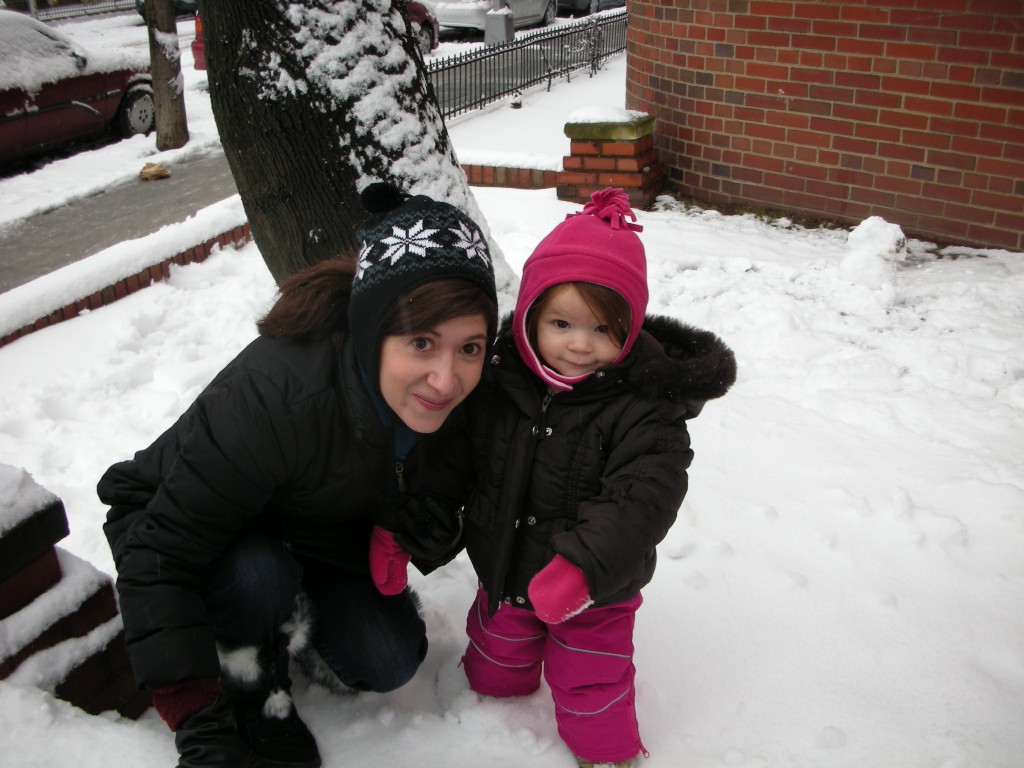
The second storm made it far enough north to hit NY, dumping a good foot of snow on us. People used it as an excuse to take off work, but it didn’t really seem to slow anyone down. The important thing is that we finally had a chance to test out Cassie’s new snow pants, and let her experience her first snowstorm. As usual, the results were too cute for words. I’ll let YouTube do the talking for me:

In other news, my new nephew Pearse, not even a month old, is clearly up to something. I don’t know what, but based on the guilty look on his face and the maniacal twiddling of his fingers, I am assuming it is no good:

Pearse_FrogPJs

Posted on February 13, 2010 at 1:27 am by PeatB
Filed under Cassie, Life
2 Comments »