Where Fantasy Meets Ethics
Posted by Meg
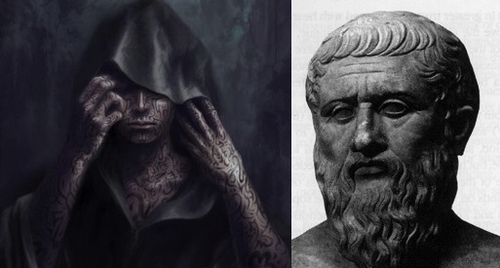
You know you’re doing something right when people start citing your books in ethics papers. Fan and student Spencer wrote to Peat to tell him about the paper he wrote for his Ethics and Values class. Spencer ended up using Peat’s books as a prime example for his paper. He also cites other fantasy favorites such as Brandon Sanderson, Patrick Rothfuss and George R.R. Martin.
Spencer let us know the paper received a B+. Not too shabby!
See what he had to say:
Plato in his discussions with Euthphryo discusses if good is good because good is a coherent object that all mankind should recognize and follow or that good exists because God(s) deem it to be right. Throughout literature this same debate is echoed by authors from all walks of life through them experimenting with these concepts with different books or even multiple religious settings in a single book. Fantasy novels provide some of the greatest examples in literature including Robert Jordan’s Wheel of Time and George RR Martin’s A Song of Ice and Fire. This philosophical theory is explored often times by using the protagonist who is being thrust into a world in disarray.
The main character in the Wheel of Time by Robert Jordan has been prophesied to save the world or destroy it depending on the choices he makes. The Supreme Being or Power in this world is called the Pattern, which is a wheel that is constantly weaving the past, present, and future into an intricate pattern with each thread representing a different person. The Pattern’s primary function as an element of Deity is to maintain a perfect balance between good and evil. Jordan examines throughout his book two different versions of Plato’s question: first, if your Deity(s) is able to manipulate you through prophecy to act in accordance with their will and second that if good is good because it’s the opposite of evil.
I love the theory that do we live our lives because there is a pattern that has been set before us or we’ve been told by others who act as the voice of our Deity(s) to live a certain way thus making every choice we make essentially good in the eyes of our Supreme Power(s). Many religions, especially Asian influenced, have a strong belief that good exists only because evil exists. I agree to a certain point that this is a great argument for defining what good is but I find a fatal flaw in that it would require your Deity(s) to know/create things that will cause evil, which seems to be a contradiction in of itself.
Many people strongly believe that a vow made before one’s Deity(s) is a solemn vow that must never be broken at whatever cost. George RR Martin explores this theory in his series A Song of Ice and Fire. In his world there are multiple different religious groups that force you to make your promises before your God(s) in hopes that you are less likely to break that vow. One character in particular, Jon Snow, believes this to be true so firmly that he even forsakes all family relationships, a kingdom, and refuses to go against it even when threatened with his own death.
Is there a point in which our Deity(s) condone us forsaking our vows to them? I believe it’s one of those questions that is so complicated that even within one’s own religion you will get various answers. Thus making it a decision that is held by each individual.
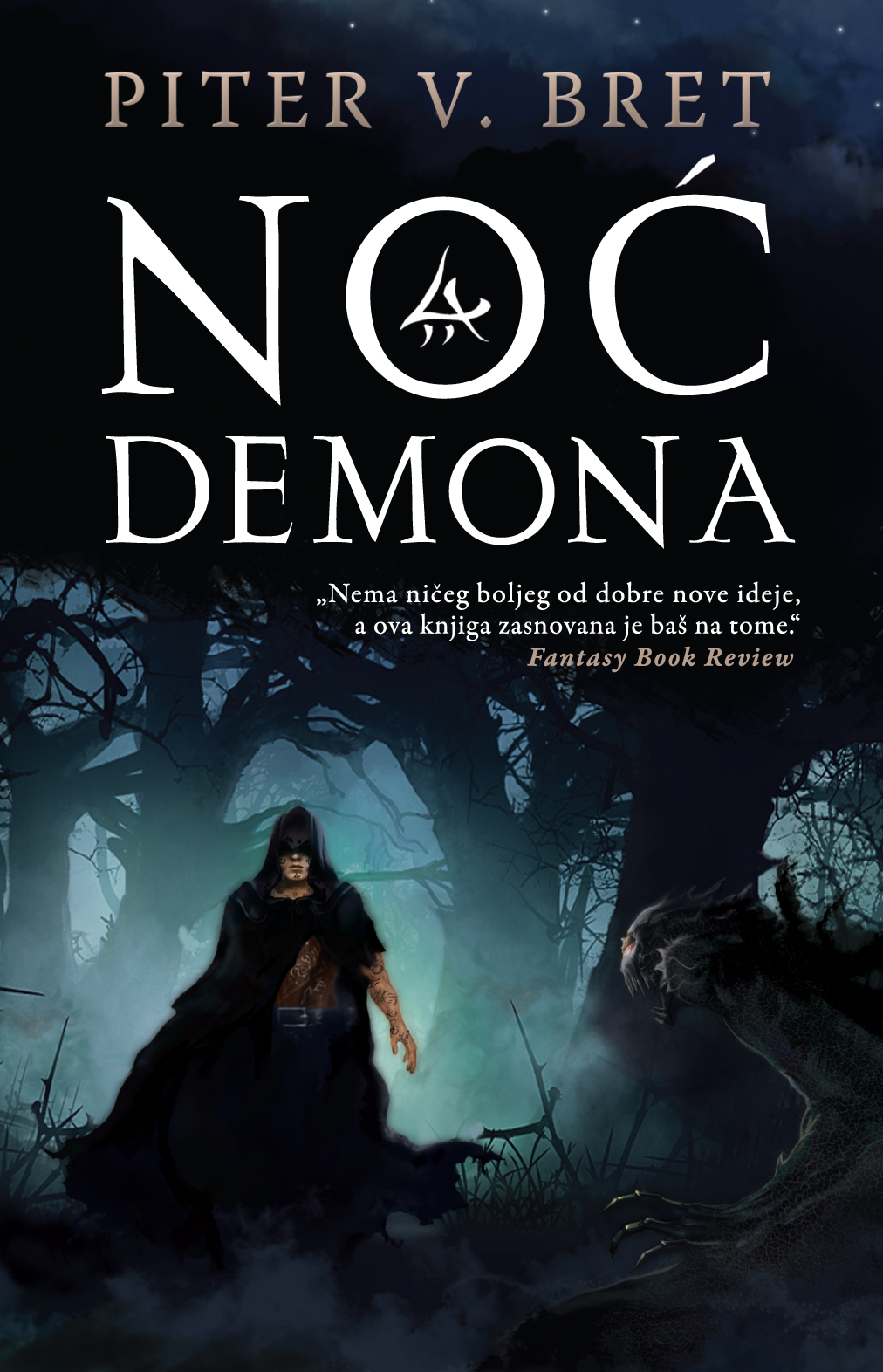
In his Demon Cycle series Peter V. Brett has put all of mankind in danger of total destruction by demons that rise nightly. Up to the point that starting point of the book there has been nothing that has proven successful in defeating them, all they can do is hope that their wards (drawings done in various methods to protect an area or region) hold out for the night so they can continue with their lives in the daylight. Arlen finds a purpose in his life by seeking out old knowledge necessary to vanquish these demons once and for all. He is put in a position where he must choose how far he must cross, what is socially acceptable in his region, in order to win the war.
Even to where he wonders what he really is due to him having to literally become part demon in order to win.
The resounding question of how far one can go doing bad in order to bring good about is one view that would be interesting to ask of Plato. Is there a definitive line in the sand that one must cross in order to say that you are no longer good but now evil, even if it brings good in the end, or is it evil no matter what? Like so many questions concerning the true nature of good there is no right or wrong answer. There are too many variables to be measured that it would be impossible to get a full answer to the question.
Plato in Euthphryo asks about the different God(s) and how they can be God(s) if they contradict one another. Brandon Sanderson brings to light this very argument in his Mistborn series. The Gods of the world are in a constant war trying to maintain their own power in objective, using people as a means to their end. By the end of the series through various workings Sanderson combines the power of both Gods into a single entity called Harmony, where perfect balance can be maintained.
I personally believe that what he was trying to bring out or what we can take away from Mistborn is that if one believes in multiple God(s) whose ideas and philosophies contradict each other it’s best to choose the common ground beliefs between them. By acting as such we can ensure that we will do well by our Supreme Power(s) while not allowing a contradiction to occur.
Patrick Rothfuss must assuredly study Plato and his theory that there is a perfect form of something and that is how we come to know what things are. In his Kingkiller Chronicles series he uses this theory as the basis of his magic, that in order to use something to your own purpose you must know its true name and call it by such. He alludes that there are greater powers that one can know such as good because all things have a true name.
The concept of a true concept of good existing and we don’t need a Supreme Power to tell us what is good because he says so is one that resonates strongly with me. I personally feel that the two concepts really go hand and hand, both being right. Maybe good is good because it exists and the Deity(s)(s) recognize that as the true form of good therefore they try to get us to see the same as them making it fully possible for us to find it without them but much easier with them.
Much like Plato, authors never come out and say specifically what their stance is concerning what the true definition of “good” is. That is why fantasy authors are some of the best philosophers without ever being recognized as such. They can put philosophy in contexts that make sense and appeals to one’s mind. Good is one of the few words that exist in the world that can and will be defined differently by each person depending on what their personal religious beliefs, economic status, and current mental status. Therefore it is necessary and expedite for it be defined based on the cultural acceptance of certain actions and one’s own self-awareness in trying to act in an uplifting and positive manner. In doing this one can ensure their own success in doing and being good.
Thanks to Spencer for sending in the paper! Truly fascinating.
P.S. Please join Peat TOMORROW, March 14, from 8-10pm EST, on Reddit Fantasy as for an author Ask Me Anything session. Peat will be live, answering questions about his books, publishing in general, or anything else you care to ask.
 I am TOTALLY PSYCHED to announce that